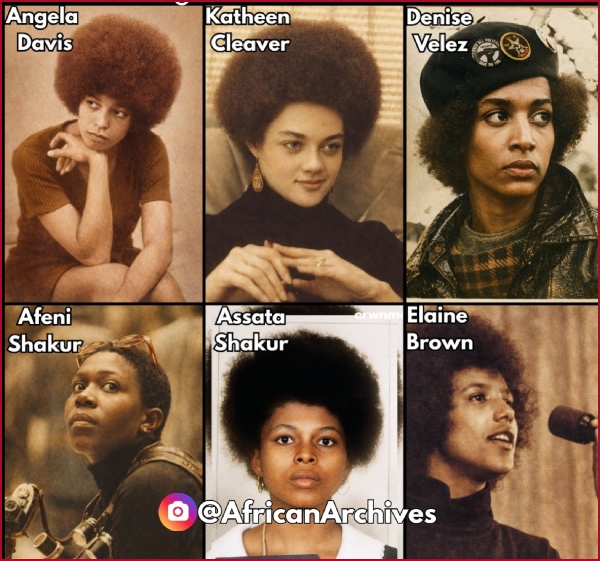
Today, for Black History Month, we reflect on Black liberation history, singling out six extraordinary women whose leadership, organizing, and political education were central to the civil rights and Black Power movements of the 1960s and 1970s—often under-recognized at the time.
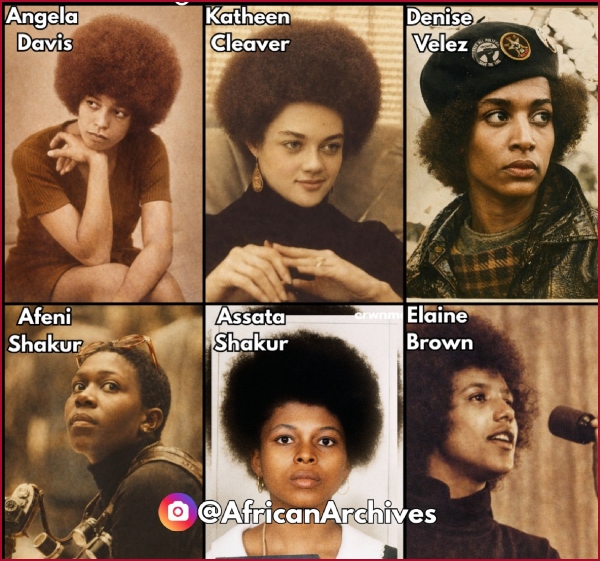
Angela Davis, Kathleen Cleaver, Denise Oliver-Velez, Afeni Shakur, Assata Shakur, and Elaine Brown played pivotal roles in grassroots mobilization, mutual aid, prisoner advocacy, and resistance to systemic racism and police violence.
Their work ranged from building survival programs and political education circles to confronting state repression head-on.
- Angela Davis: Philosopher, academic, and activist whose trial for conspiracy became an international symbol of resistance; she continues to influence global conversations on prison abolition and racial justice.
- Kathleen Cleaver: Key strategist and communications director for the Black Panther Party; one of the first women to hold a high-ranking position in the organization.
- Denise Oliver-Velez: Puerto Rican-Black activist in the Young Lords and Black Panther Party; pioneered intersectional organizing around race, gender, and class.
- Afeni Shakur: Mother of Tupac Shakur; Panther activist and legal strategist who defended herself in the “Panther 21” trial and later supported community empowerment.
- Assata Shakur: Former Black Liberation Army member and political exile in Cuba; her autobiography and ongoing activism remain touchstones for liberation struggles.
- Elaine Brown: First woman to lead the Black Panther Party (1974–1977); expanded survival programs and emphasized women’s leadership within revolutionary movements.
These women faced surveillance, arrests, trials, incarceration, and exile, yet their day-to-day work—organizing free breakfast programs, health clinics, political education classes, and anti-police violence campaigns—sustained communities under siege and laid foundations for modern movements.
Often, their contributions are frequently sidelined in mainstream narratives, yet their legacies continue to inspire today’s fights for racial justice, gender equity, and systemic change.