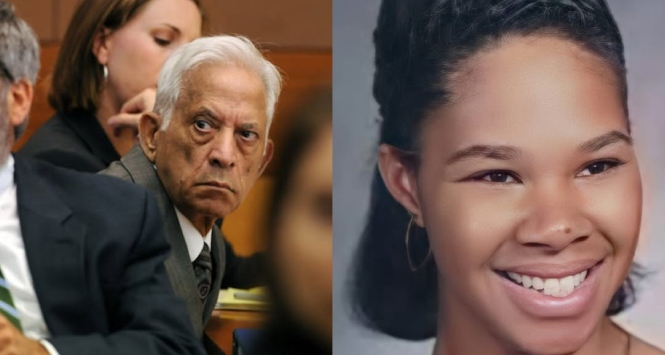
The killing of Sparkle Michelle Rai remains one of the most disturbing examples of how racism can manifest beyond traditional narratives—underscoring that prejudice is not confined to simple black-and-white dynamics.
In April 2000, the 22-year-old was brutally murdered in her Georgia apartment in what prosecutors later described as a calculated, hate-driven contract killing.
Authorities said the plot was orchestrated by her father-in-law, Chiman Rai, who opposed her marriage to his son because she was Black.
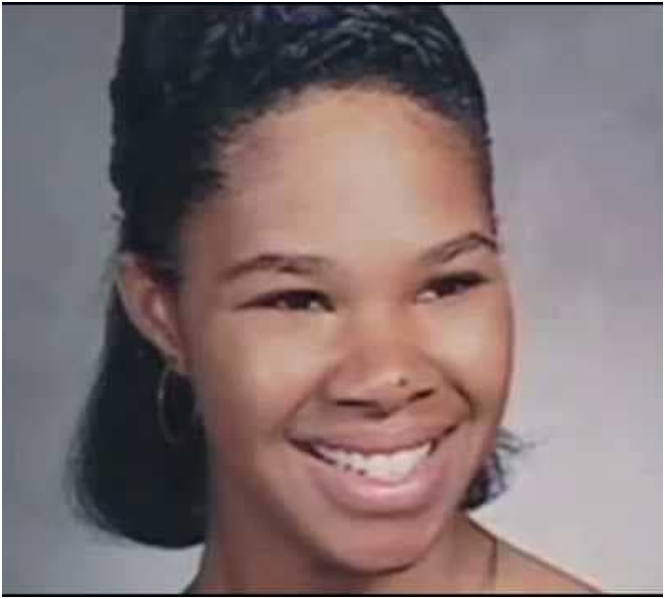
According to court records and testimony, Rai paid $10,000 to have his daughter-in-law killed after she refused an earlier offer of money to leave his son.
Sparkle had been married for just weeks and was the mother of an infant daughter, who was present in the apartment at the time of the attack but unharmed.
Investigators said Sparkle was stabbed and strangled, a crime that initially went unsolved for years due to limited evidence. The case saw a breakthrough in 2004 when witnesses came forward, eventually linking multiple individuals to the हत्या-for-hire scheme.
In 2008, a jury convicted Chiman Rai on multiple charges, including felony murder and burglary. He was sentenced to life in prison without the possibility of parole.
Prosecutors argued that his actions were rooted in racial hatred, citing testimony that he viewed the marriage as bringing shame to his family.
The case involved several co-conspirators, with intermediaries and the alleged attacker also facing charges. Some cooperated with authorities and testified during the trial, helping secure the conviction.
Sparkle’s father, Bennet Reid, expressed a sense of relief following the verdict, though he acknowledged that justice could not undo the loss.
Chiman Rai later died in prison in 2022.
More than two decades later, the case continues to resonate as a stark example of how racism can intersect with family dynamics, cultural expectations, and violence.
It also highlights the broader reality that hate-driven crimes can emerge in complex ways across different communities—challenging assumptions about where prejudice exists and how it operates.