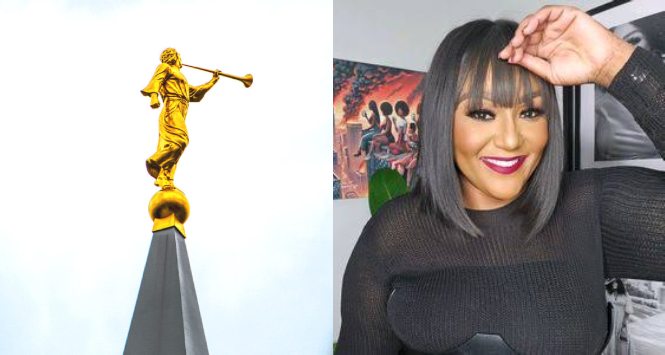
A debate over religious identity, government authority, and political loyalty has come to the fore in America after the U.S. Department of Defense reclassified members of The Church of Jesus Christ of Latter-day Saints into a separate category rather than listing them under its broader Christian classifications.
The move has sparked criticism from some Mormon leaders, lawmakers, and commentators, including social commentator Nikki Free, who argued that the controversy raises a larger question about whether government agencies should be determining which faith traditions qualify as Christian.
“Government should never be in the business of deciding whose faith counts,” Free said in a video discussing the issue. “Religious freedom is not tested when the government recognizes people who believe exactly what you believe. It’s tested when the government recognizes people who don’t.”
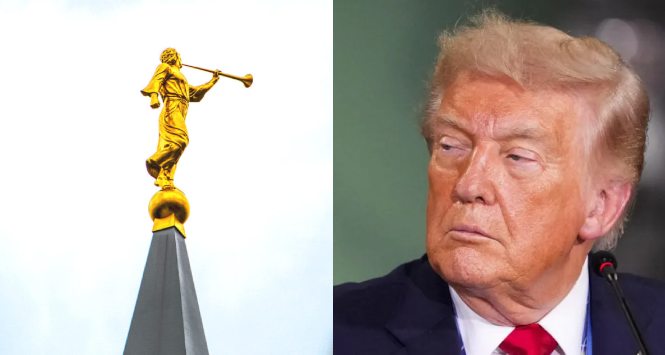
The controversy stems from a Defense Department decision to reduce its list of religious designations from more than 200 categories to just 31. Under the updated classification system, The Church of Jesus Christ of Latter-day Saints appears as its own category rather than under the umbrella of Christian denominations, which include Catholics, Baptists, Methodists, Lutherans, Evangelicals, and others.
According to an official Pentagon memorandum, the changes were designed to streamline the collection of religious preference data for military personnel and improve chaplaincy support services.
However, the decision has generated backlash in Utah, where a large percentage of residents belong to the Latter-day Saints faith.
‘Who Gets to Decide?’

Free framed the issue as a striking irony, noting that many members of the church have spent decades defending their Christian identity against critics who argued otherwise.
“For decades, some evangelical Christians argued that Mormons weren’t really Christian,” she said. “Now they find themselves confronting a question they have spent years answering themselves: Who gets to decide what counts as Christianity? A church? A politician? A government agency? A cabinet secretary?”
Her comments echoed concerns raised by Republican Utah Senators Mike Lee and John Curtis, both members of the Latter-day Saints church.
Lee publicly questioned why the church had been excluded from the Pentagon’s Christian category, arguing that his faith and Christianity are inseparable.
“My church membership is inextricably intertwined with my Christianity, as it is for 17 million other Latter-day Saints,” Lee wrote on social media.
Curtis similarly called the classification “unacceptable,” stating that Latter-day Saints are “unequivocally Christian” and that government agencies should not characterize a religion in ways that contradict its own beliefs.
Politics and Religious Identity
Free also highlighted the political dimensions of the controversy, pointing to the strong support many Latter-day Saints have historically given former President Donald Trump and the broader MAGA movement.
According to figures cited in her commentary, approximately 64% of Mormon voters supported Trump in the 2024 election.
“The same political movement that promised to defend Christian values is now helping create a system that appears to separate one of its most loyal religious constituencies from other Christians,” she said.
The commentator argued that the issue extends beyond one denomination, warning that government involvement in defining religious legitimacy could eventually affect other faith groups.
“Today, it’s Mormons. Tomorrow, who knows?” Free said.
Wider Concerns About Religious Freedom
Critics of the Pentagon’s decision have argued that the move ventures into theological territory that government agencies should avoid.
Eric Biggart, chair of the LDS Democrats Caucus, told ABC4 that allowing a federal department to determine what constitutes Christianity reflects a broader tension between politics and religion.
Meanwhile, the Defense Department has maintained that the changes are administrative rather than doctrinal, describing the updated list as a practical effort to streamline military religious data collection.
Still, Free warned that the debate carries implications beyond military paperwork.
“Authoritarianism doesn’t stay confined to its original targets. Eventually, it comes for people who thought they were on the inside, too,” she said.
As discussion continues, the controversy has become a flashpoint in ongoing national conversations about religious freedom, government authority, and the role of public institutions in matters of faith.