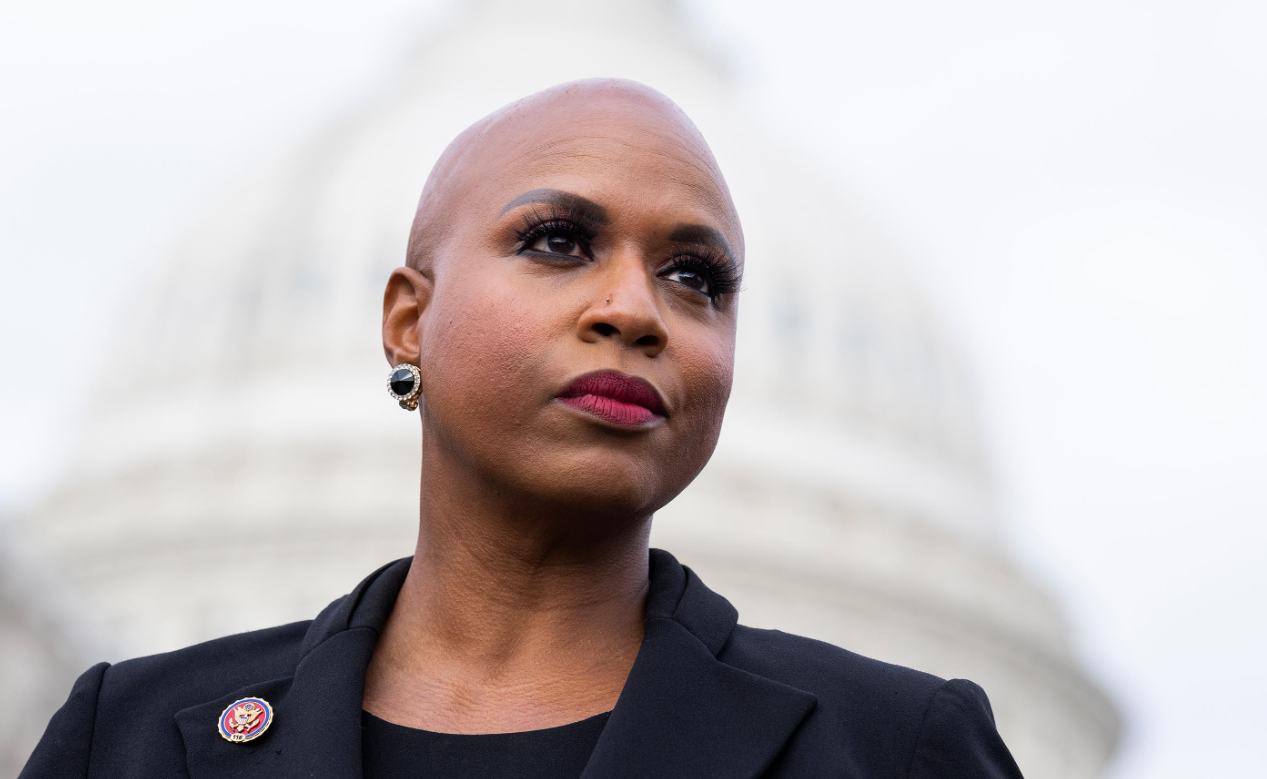
U.S. Rep. Ayanna Pressley is renewing her call for major reforms to the U.S. Supreme Court, arguing that the nation’s highest court is undermining rights that generations of Black Americans fought to secure.
Speaking at a recent program, a video of which was posted on social media, Pressley could be heard describing the court as “corrupt” and said lawmakers must pursue efforts to expand and reform the institution.
Her comments were accompanied by a video in which she reflected on what she sees as a historical pattern of progress followed by backlash against Black advancement in America.
“We have pattern recognition as Black folks for this moment,” Pressley said. “People like to say it’s unprecedented. It’s not. It’s unprecedented for many of us in our lifetime, but it’s not unprecedented every time we have rise.”
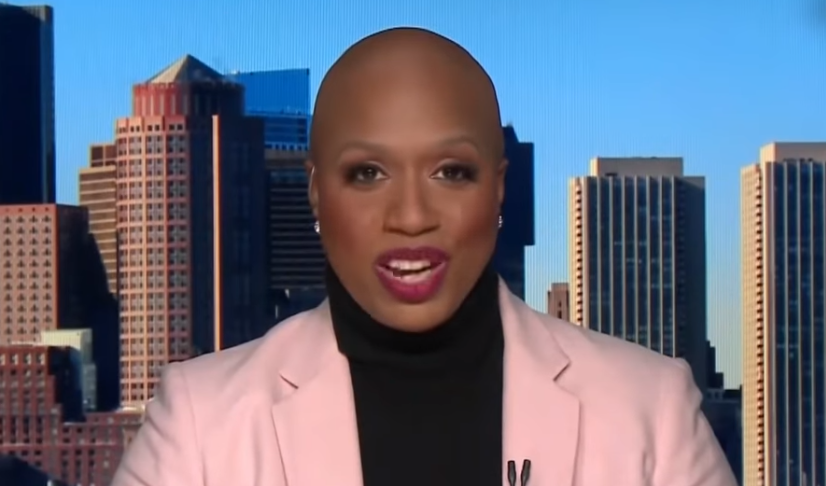
The congresswoman framed current debates over the Supreme Court through the lens of civil rights history, drawing a sharp contrast between two of the court’s most prominent Black justices.
“When Thurgood Marshall was on the bench, he expanded our rights,” Pressley said. “And Clarence Thomas is on the bench, restricting and limiting our rights.”
The remarks come amid ongoing national debates over the Supreme Court’s role in issues ranging from voting rights and affirmative action to reproductive rights and ethics standards for justices.
Critics of the court have increasingly called for reforms, including term limits, ethics rules, and expanding the number of justices, while opponents argue such measures could undermine judicial independence.
Pressley’s comments also referenced allegations surrounding ethics controversies involving members of the court. In the video, she accused Thomas of “taking bribes,” echoing criticism from some lawmakers and advocacy groups who have questioned gifts and benefits received by certain justices from wealthy donors. Thomas has previously denied wrongdoing and maintained that he has complied with applicable disclosure requirements.
For Pressley, the debate is about more than individual rulings. She argued that Black Americans have seen similar cycles throughout U.S. history, where periods of social and political progress are followed by efforts to restrict gains in equality and representation.
Her message underscores a broader push among progressive lawmakers who believe structural changes are needed to restore public trust in the Supreme Court and protect civil rights protections they say are increasingly under threat.
As discussions over judicial reform continue in Washington, Pressley’s comments highlight how the future of the Supreme Court remains a deeply contested issue, not only in legal circles but also in broader conversations about race, democracy, and the direction of the country.