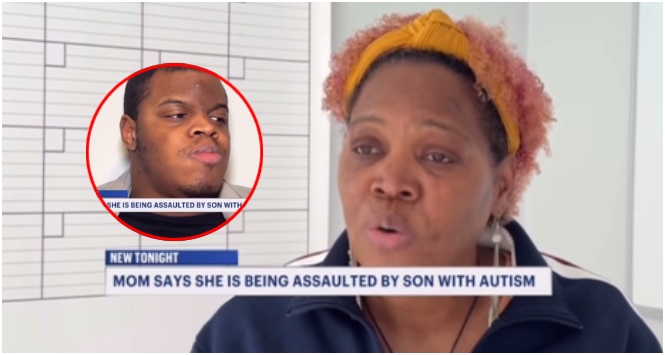
A Connecticut mother is sharing her painful reality during Autism Awareness Month, saying the most difficult part of her journey is admitting she can no longer safely care for her profoundly autistic adult son at home.
“My son is hurting me,” said Leticia Johnson, a 47-year-old single mother who has spent her life caring for her 24-year-old son, Christian, who is non-verbal and has severe autism.
Johnson says the situation has escalated to the point where her safety is at risk. She described a recent incident in which her son gouged her eye, as well as past attacks that left her with a broken arm and visible scars across her body.
Despite the violence, she pointed out that her son’s actions are not driven by malice, but by the severity of his condition and unmet care needs.
“I Can No Longer Provide the Care He Needs”
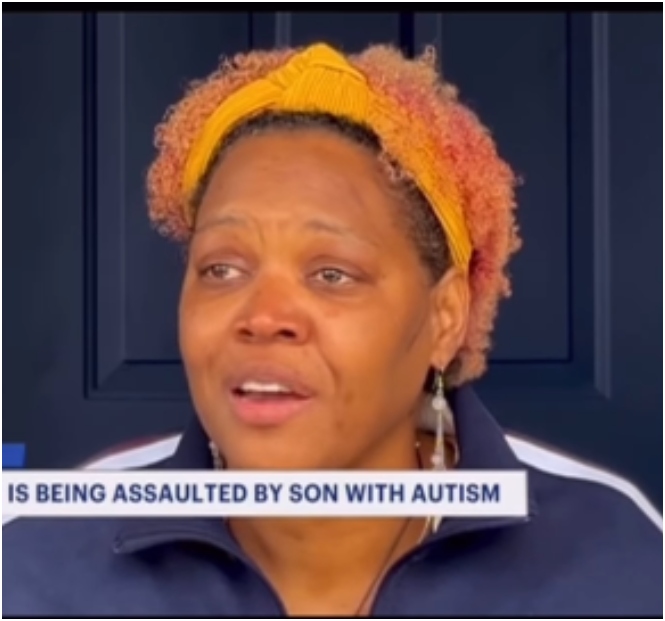
Johnson, who is compensated by the state to care for her son at home, says she has reached a heartbreaking conclusion.
“This is the hardest thing I’ve ever done,” she said. “I’m advocating for my son to leave my home because I can no longer provide the care he needs.”
Her plea underscores a lesser-discussed reality for families of individuals with profound developmental disabilities: when care needs exceed what can safely be managed in a home environment.
Years-Long Wait for Placement
Johnson has been seeking placement for her son in a group home through the Connecticut Department of Developmental Services, but says the wait has stretched on for years.
She expressed frustration that, despite being told there are available placements across the state, her son has yet to be transitioned into a more appropriate care setting.
“I feel like I’m not being heard,” she said. “We need to be his voice.”
Advocates Push for Urgent Action
Sujatha Gadkar-Wilcox has stepped in to advocate for the family, calling the situation urgent and emotionally devastating for both mother and son.
Officials say efforts are underway to expedite placement, though systemic challenges continue to delay access to residential care for many families.
A System Under Strain
The case highlights broader concerns about gaps in support systems for individuals with severe autism and their caregivers.
Johnson pointed to the intent of the Americans with Disabilities Act, which was designed to remove barriers and ensure access to necessary services for people with disabilities—particularly those unable to advocate for themselves.
Advocates say that while awareness campaigns often highlight uplifting stories, they frequently overlook families facing crisis-level challenges due to limited resources and long waiting lists.
“Autism Is Not the Tragedy”
Despite her ordeal, Johnson remains resolute in her love for her son and in her message to the public.
“My son’s autism is not a tragedy,” she said. “The tragedy is the lack of services and support for him.”
As she continues to push for placement and additional support, her story is prompting renewed attention to the urgent need for expanded care infrastructure—especially for adults with severe developmental disabilities.