
A travel journalist’s recent walk through East Austin has brought attention to a powerful piece of American history, after her video shone a light on how a community born out of segregation became a cultural force.
“Where we encounter segregation, we create congregation,” the journalist, Nicole Phillip, said in a video shared on Instagram — a line bringing back forgotten history that tells a worthy story of Black resilience.

A Community Built by Force — and Strength
Phillip’s visit, hosted by Black Austin Tours, explored what was once known as Austin’s “Negro District” — an area shaped by the city’s 1928 plan that effectively pushed Black residents and services to the east side.
The move came after the U.S. Supreme Court ruled against explicit racial zoning. In response, city leaders redirected resources, concentrating schools, healthcare, and public services for Black residents in one area — a workaround that reinforced segregation without explicitly legislating it.
But what began as displacement evolved into something far more powerful.
“They accidentally created one of the most popping cultural districts in the South,” Phillip noted.
The Heart of the Chitlin’ Circuit
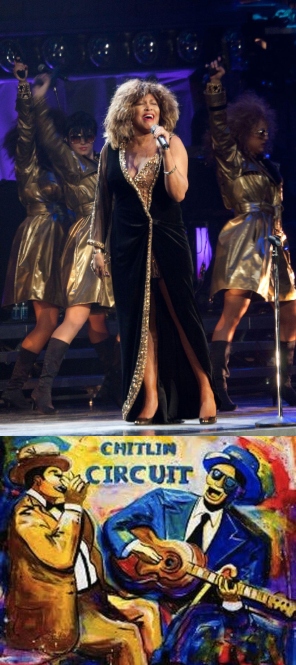
East Austin became a vital stop on the Chitlin’ Circuit — a network of venues where Black musicians could safely perform during segregation.
At the center of that legacy was the Victory Grill, a juke joint that hosted some of the biggest names in music history, including Etta James, Tina Turner, Ray Charles, and Little Richard.
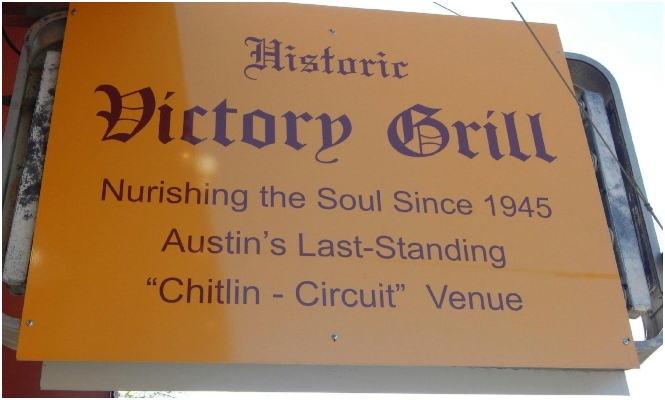
“Back in the day, Victory Grill was the spot,” Phillip said, describing packed rooms where audiences gathered to witness performances that would later become legendary.
These venues were more than entertainment spaces — they were safe havens, cultural incubators, and economic anchors within Black communities during a time of widespread exclusion.
Legacy and Change
Today, Austin is widely known as the “Live Music Capital of the World,” but Phillip emphasized that Black musicians laid the foundation for that identity long before it became a slogan.
Over time, however, East Austin has undergone significant change. Urban renewal and gentrification have reshaped the neighborhood, altering its demographics and cultural landscape.
Still, pieces of its history remain.
Victory Grill — now known as Victory East — continues to operate as a Black-owned space, hosting community events and preserving its legacy.
“It’s not the same, but we’re still holding on to that integrity,” Phillip said.
Remembering the Full Story
Phillip’s reflection comes at a time when conversations about history, identity, and representation are increasingly prominent, particularly as the United States approaches major historical milestones.
Her message is clear: the story of East Austin is not just about segregation, but about what communities build in spite of it.
“Black history is American history,” she said.

