
The death of a 19-year-old employee at Children’s of Alabama has sparked grief and questions after reports emerged about the true circumstances surrounding her final hours at work.
Jakoya Morgan, a resident of Center Point, Alabama, died on May 26 after suffering a medical emergency while on duty at the Birmingham children’s hospital.
According to the Jefferson County Coroner’s Office, Morgan was found unresponsive in her work area shortly after 4 a.m. She was transported to UAB Hospital, where she was pronounced dead less than an hour later.
While officials say an autopsy found no evidence of trauma or foul play, online discussions have intensified as unverified claims circulate regarding her treatment before and after the medical emergency.
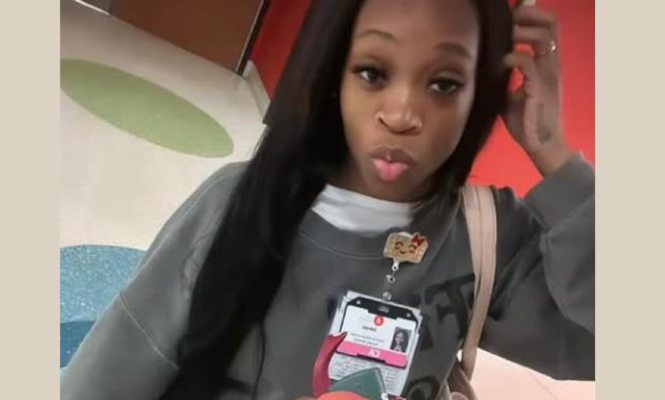
Hospital Confirms Employee’s Death
In a statement released following Morgan’s death, Children’s of Alabama expressed condolences to her family and colleagues.
“Children’s of Alabama is saddened to confirm the sudden loss of our employee, Jakoya Morgan, this week,” hospital officials said. “We extend our deepest sympathies to her family and her colleagues.”
Hospital representatives also pushed back against allegations that emergency protocols were not followed.
“In any emergency like this involving a patient or employee, our care teams respond immediately and initiate appropriate life-saving measures as they are trained to do,” the hospital stated.
Autopsy Points to Significant Medical Event
The Jefferson County Coroner’s Office reported that Morgan’s preliminary autopsy findings revealed what officials described as an “acute and significant medical event.”
According to the coroner, the event may be associated with a chronic medical condition that Morgan had previously been diagnosed with.
Officials stated that there was no evidence of foul play or physical trauma.
The final cause and manner of death remain pending additional laboratory testing.
Allegations Spread Online
In the days following Morgan’s death, social media posts began circulating alleging that she had complained of feeling ill and requested permission to leave work before her collapse.
Some posts further claimed that despite staffing levels being high enough for employees to be sent home, her request was allegedly denied.
Additional allegations shared online have suggested that medical personnel failed to immediately administer CPR or other life-saving interventions after Morgan became unresponsive.
At this time, those allegations have not been independently verified by authorities, the coroner’s office, or publicly released investigative findings.
Children’s of Alabama has not publicly addressed the specific claims beyond its statement asserting that emergency teams followed established life-saving procedures.
A Life Cut Short
Morgan’s death has resonated deeply across social media platforms, where many users have reflected on workplace stress, employee well-being, and the importance of listening to one’s physical health.
Posts honoring Morgan have highlighted her youth and the tragedy of a life ending at just 19 years old.
The conversation has also sparked broader discussions about workplace culture and whether employees feel empowered to prioritize their health when they are sick or exhausted.
One widely shared message encouraged workers to use available leave time and prioritize their well-being.
“Go home when your body tells you to,” the post read. “Spend time with the people who actually love you.”
Awaiting Answers
For now, many questions surrounding Morgan’s death remain unanswered.
The final autopsy report and pending laboratory results are expected to provide additional insight into the medical event that led to her collapse.
Until then, officials maintain that the death appears related to a serious medical condition rather than any criminal act or external cause.
As family members, friends, and colleagues continue to mourn, Morgan’s death has become a focal point for larger conversations about health, workplace expectations, and the human cost of ignoring warning signs when the body signals that something may be wrong.
At the center of those discussions is a 19-year-old woman whose sudden passing has left a community searching for answers and struggling with loss.

