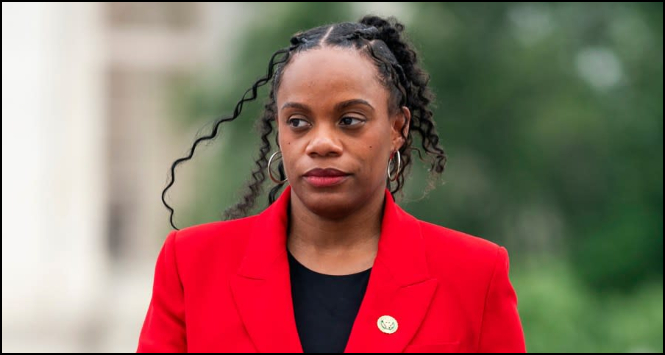
U.S. Representative Summer Lee is calling on fellow Democrats to speak out more forcefully against what she describes as a growing wave of anti-Muslim rhetoric in American politics, warning that silence in the face of such attacks threatens both vulnerable communities and the broader coalition that supports civil rights and democratic values.
In a video posted on social media on June 4, Lee expressed frustration over what she characterized as inadequate responses from Democratic leaders following attacks directed at Muslim elected officials and candidates.
“The silence from Democrats when Muslim colleagues and candidates are attacked is a cancerous rot,” Lee wrote in an accompanying post. “We cannot lead our country out of this moment if we’re willing to accept the abuse or dehumanization of any marginalized group.”
Concerns Over Attacks on Muslim Lawmakers
Lee pointed specifically to recent comments directed at fellow Representative Rashida Tlaib, one of the first Muslim women elected to Congress.
“Yesterday on the House floor, two different Republicans basically called my sister Rashida a terrorist,” Lee said, arguing that the attacks were rooted in prejudice tied to Tlaib’s Palestinian heritage, Muslim faith, and identity as a woman.
Lee also referenced criticism aimed at Muslim political candidates and public figures, including physician and military veteran Dr. Hamawi, whom she described as having devoted his career to saving lives.
According to Lee, such incidents are part of a broader trend that deserves greater public attention.
“The anti-Muslim rhetoric is picking up,” she said. “And we don’t often talk about how dangerous that is.”
A Challenge to Democratic Leaders
While much of Lee’s criticism was directed toward Republicans, she also challenged members of her own party.
She argued that some Democrats have failed to confront anti-Muslim stereotypes and rhetoric with the same urgency applied to other forms of discrimination.
“As the Democratic Party, we are supposed to be the ones fighting for justice and equal opportunity and liberation,” Lee said. “If we aren’t able to speak up against this right now, then how can we continue to hold that particular mantle?”
The Pennsylvania congresswoman warned that remaining silent could weaken the party’s credibility on issues of equality and civil rights.
‘A Battle for Each and Every One of Us’
Throughout her remarks, Lee framed the issue as part of a broader struggle against discrimination targeting multiple communities.
She noted that Black Americans, Muslims, transgender individuals, immigrants, and other marginalized groups are often singled out in political debates and public discourse.
“Whether you are Muslim or Black or trans, there are easy targets on our communities,” she said.
Lee argued that attacks on one vulnerable group should concern everyone, regardless of race, religion, or political affiliation.
“Our liberation is tied together,” she said. “Whether you are Black or brown or Muslim or Jewish right now, an attack against one is an attack against each and every one of us.”
Warning Against Silence
A central theme of Lee’s message was the danger of inaction.
She suggested that allowing hateful rhetoric to go unchallenged can normalize discrimination and embolden further attacks.
“We shouldn’t be ones who are complicit through our silence,” she said.
Lee described the current climate as a “moral rot” that requires a collective response before it worsens.
“I hope that we will not stand by and let this particular hatred grow and grow until it’s out of our control,” she said.
Broader Debate Over Political Rhetoric
Lee’s comments come amid ongoing national debates over political polarization, religious discrimination, and the treatment of minority communities in public life.
Advocacy groups have repeatedly raised concerns about Islamophobia in political campaigns, social media discourse, and public institutions, while civil rights organizations have called for stronger responses from elected officials across the political spectrum.
For Lee, the issue goes beyond partisan politics.
“This shouldn’t just be progressives,” she said. “It shouldn’t just be other Black people or brown folks who are speaking out. This is a battle for each and every one of us.”
Her remarks feed into conversation within American politics about how parties, institutions, and leaders should respond when members of marginalized communities become targets of hostility, stereotyping, or dehumanizing rhetoric.