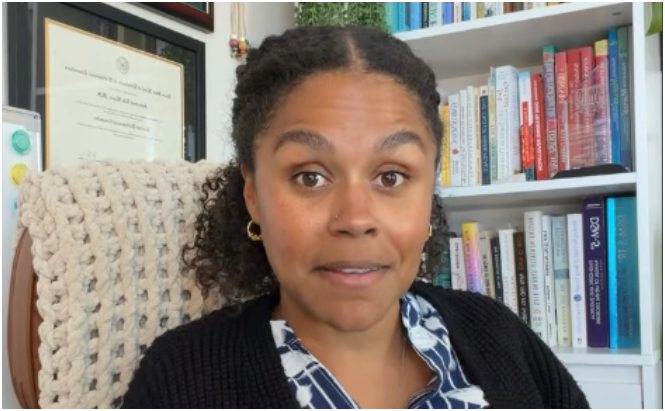
A relationship therapist is prompting a deeper conversation about how childhood coping mechanisms can quietly shape adult relationships, arguing that behaviors once necessary for survival may later become obstacles to emotional intimacy.
Savannah Kizzie-Rai, known online as “Hey It’s Sav,” recently shared a message that resonated with thousands of followers. Her message encouraged people to examine how their nervous systems react during moments of conflict with romantic partners.
“The very skill that saved me, the very skill that kept me alive, is the very skill that’s going to kill me in this arena if I continue to play that card here,” Kizzie-Rai said in a video discussing relationship dynamics and emotional regulation.
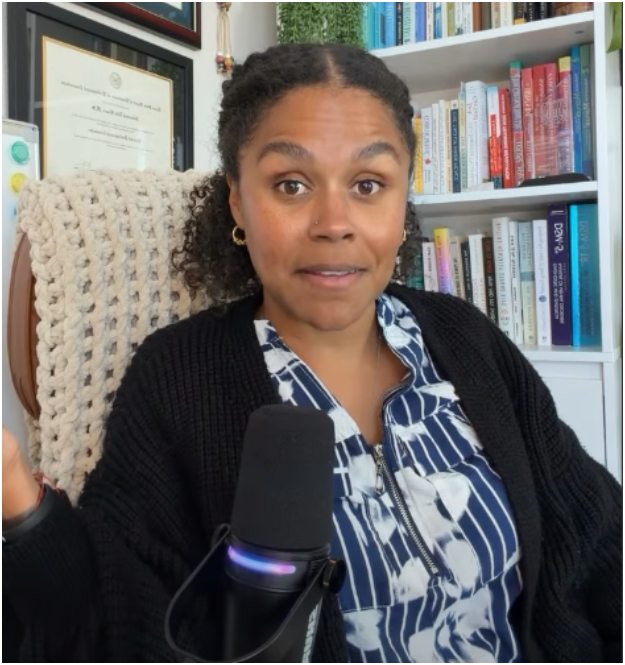
According to the therapist, many adults unknowingly bring childhood survival strategies into their romantic relationships. Behaviors such as overexplaining, defensiveness, emotional shutdowns, or avoidance may have once helped individuals feel safe, heard, or protected during difficult experiences growing up.
However, Kizzie-Rai argues that those same responses can create tension when carried into adult partnerships.
“Your girl doesn’t know how to stop talking sometimes because I had to defend myself,” she said, reflecting on her own experiences. “But my amygdala has to remind myself I’m not in that old arena where I had to defend.”
Her comments centered on the idea that emotional triggers often activate deeply ingrained patterns developed earlier in life. What may appear to be a disagreement between partners, she suggested, can sometimes be a collision between unresolved survival instincts.
Kizzie-Rai also challenged women to consider forms of accountability that extend beyond visible actions.
“I love how women hold men accountable for things in the 3D that they don’t do,” she said. “Yet who’s holding us women accountable for things in the psychology we haven’t learned to practice?”
The therapist encouraged people to pause before reacting during emotionally charged moments. Instead of immediately sending lengthy messages or attempting to process intense emotions with a partner in real time, she recommends journaling or using voice recordings as a way to regulate emotions before initiating difficult conversations.
In her accompanying post, Kizzie-Rai explained that when a person becomes highly activated emotionally, excessive verbal processing can sometimes overwhelm a partner rather than foster understanding. She argued that self-regulation is an important precursor to productive communication.
The broader message struck a chord because it framed relationship conflict not simply as a matter of compatibility but as a reflection of personal healing and emotional growth.
Kizzie-Rai also noted that these patterns affect men and women alike.
“It’s the same thing for men,” she said. “Being avoidant kept them alive from their parent, whatever it was. Being avoidant in this dynamic digs their hole deeper.”
Her remarks have fueled online discussions about attachment styles, trauma responses, emotional intelligence, and the ways childhood experiences continue to influence adult relationships long after the original circumstances have passed.
For many viewers, the most powerful takeaway was her reminder that growth often requires recognizing when an old survival strategy is no longer serving its purpose.