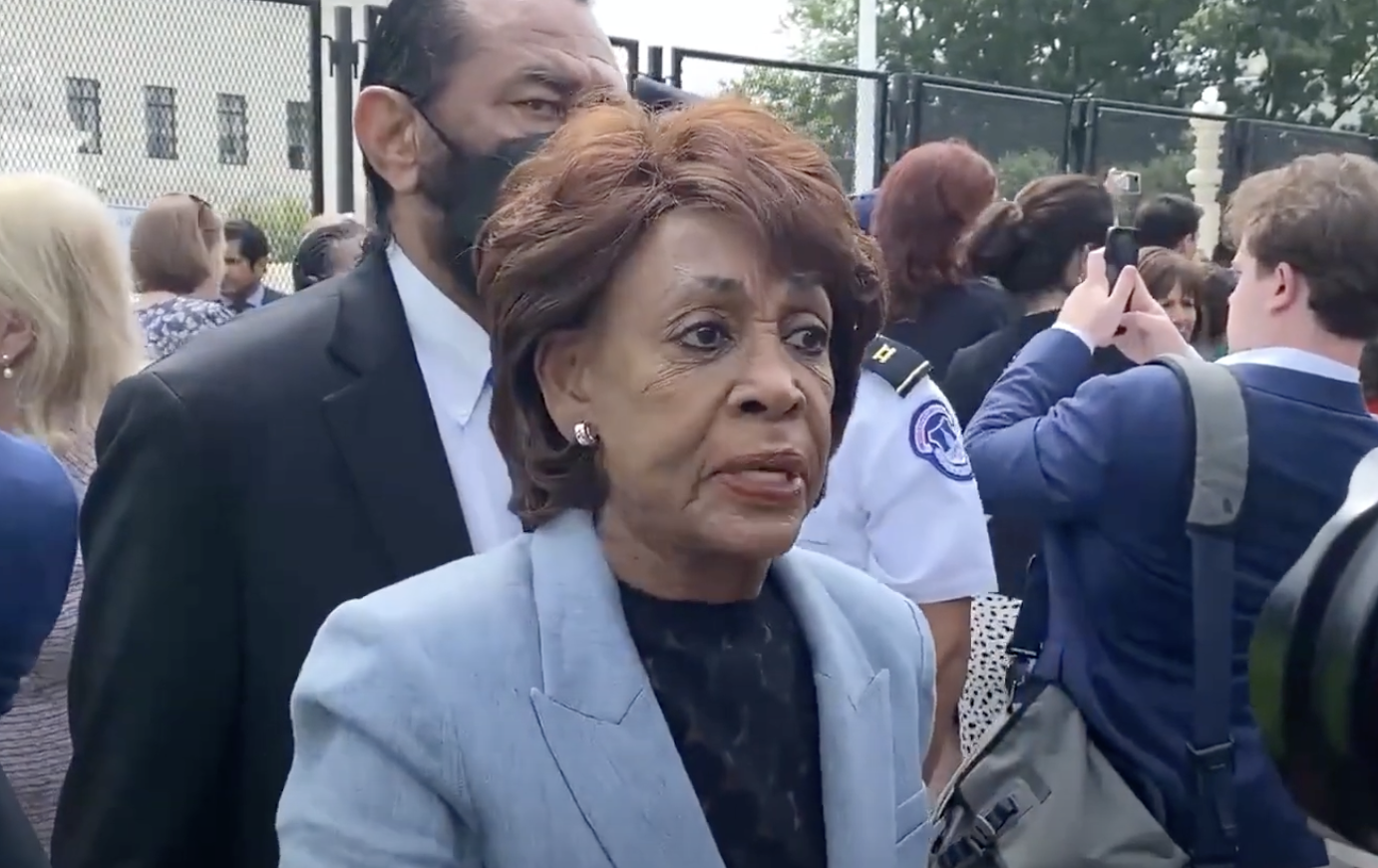
Rep. Maxine Waters delivered one of the most blistering denunciations yet of President Donald Trump’s renewed deportation agenda, telling reporters that Black and Brown communities are “more united than ever” as they mobilize against ICE operations nationwide.
At a press conference, Waters held nothing back, calling Trump a “low-down, dirty, no good, filthy president” and accusing his administration of deliberately targeting community leaders of color while escalating aggressive enforcement tactics.
“They are targeting our leadership, both in the Latino community and in the Black community,” Waters said in a video posted by Meidas Touch. “And while they’re targeting them and following them — I’m on the street and I’m following ICE. I’m targeting ICE.”

A Community Rising Up
Waters, whose political brand has long intertwined with activism in the streets, praised the growing wave of protests against deportations and detention practices. She said the movement represents the “biggest coming together of the Black and Brown community that we’ve seen in this city ever.”
Her message was simple: stay visible, stay loud, and don’t stop.
“We are documenting everything. We are resisting,” she said. “The protests must continue. You must not stop.”
A Fierce Response to an Escalating Crackdown
Trump’s revived immigration plans — pledging mass roundups, expanded detention, and sweeping raids — have sparked alarm across major U.S. cities. Civil rights groups say communities of color are once again carrying the greatest burden of fear and surveillance.
Waters’ remarks reflected that tension, but also the resolve that has been building among organizers and migrant rights advocates over the last several months.
Black and Latino coalitions — historically siloed on policy battles — have been coordinating marches, legal assistance networks, and neighborhood response teams designed to monitor ICE activity and document potential abuses.
Waters put a spotlight on that new level of coordination, framing it as both a political and moral stand.
A Warning and a Rallying Cry
Waters’ comments underscore what the Biden-to-Trump transition in immigration policy has laid bare: communities most affected by enforcement are not waiting for Washington to fix it. They’re organizing themselves.
Whether you see Waters as a firebrand or a truth-teller, the underlying reality she highlighted is unmistakable — this crackdown is not just a policy shift. It’s shaping into a defining civil rights conflict of the moment.
And for those on the streets, this is no longer only about immigration. It’s about dignity, surveillance, and the government’s power to decide who belongs.