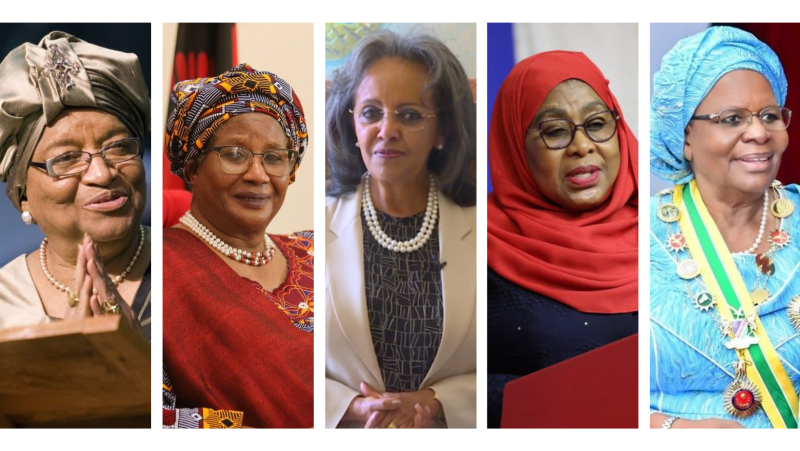
Women remain a striking minority at the highest levels of political power worldwide, even as their presence has grown steadily over time. Today, women serve as head of government in just 13 of the 193 United Nations member states, underscoring both progress and persistent gaps in global leadership.
According to a recent Pew Research Center report, among those leaders are Barbados Prime Minister Mia Mottley, who was recently reelected, and Japan’s Sanae Takaichi, who made history as her country’s first female prime minister. Takaichi is one of 10 current leaders who are the first women to hold the top government role in their respective countries, reflecting a slow but meaningful shift in political representation.
Other nations have seen multiple women rise to power. In Iceland, for example, Kristrún Frostadóttir became the country’s third woman prime minister in 2024, highlighting how some political systems have moved beyond firsts toward a more normalized presence of women in leadership.
Still, the broader historical picture shows how recent these gains are. Of the 193 UN member states, only 63 have ever had a woman serve as head of government. The first was Sirimavo Bandaranaike of Sri Lanka, who took office in 1960, paving the way for future leaders in countries like India and Israel later that decade.
The pace of change accelerated after 1990, with a notable surge in 2010 when five countries elected women leaders for the first time. More recently, 2025 marked another milestone year, with Japan, Namibia, and Suriname all joining the list.
Despite these advances, long tenures among women leaders remain relatively rare. Mia Mottley is currently the longest-serving woman head of government in office, with nearly eight years in power. Historically, that distinction belongs to former Bangladeshi Prime Minister Sheikh Hasina, who held power for more than two decades before stepping down in 2024 amid political unrest.
Some leaders are excluded from these counts, including interim officials and those in non-UN member states, as well as figures without clear governing authority.
Taken together, the data tells a story of gradual but incomplete change: a world inching toward gender parity in leadership, but still far from reaching it.