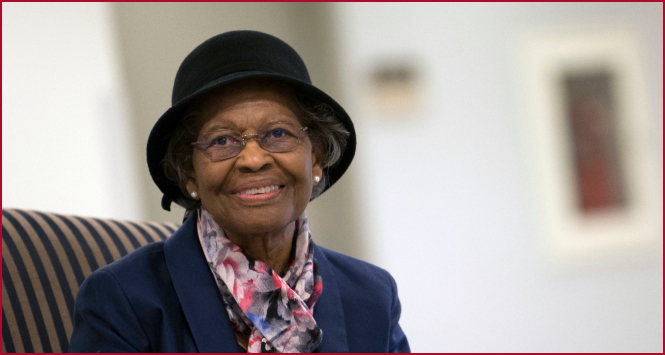
Before Google Maps, Waze, or even the first satellite navigation system, there was Dr Gladys West, a quiet mathematical genius from rural Virginia who changed how the world finds its way.
Born in 1930 to a sharecropping family, West grew up picking tobacco and corn under the Southern sun before earning a scholarship to Virginia State University, one of the few historically Black colleges offering advanced math degrees at the time.
What began as a love for numbers would later become one of the most important scientific contributions in modern history.

When she joined the Naval Proving Ground in Dahlgren, Virginia, she was one of only four Black employees — and the only Black woman in her department.
The world she stepped into was segregated, male-dominated, and resistant to women in science. Yet West spent 42 years in that environment, meticulously calculating the exact shape of the Earth, a task far more complex than it sounds.
Using an IBM computer the size of an entire room, West developed the mathematical models that account for the planet’s gravitational pulls, tides, and subtle wobbles, forces that distort Earth’s perfect roundness.
Those computations became the foundation for the Global Positioning System (GPS), which now powers everything from your phone’s map app to military navigation satellites.
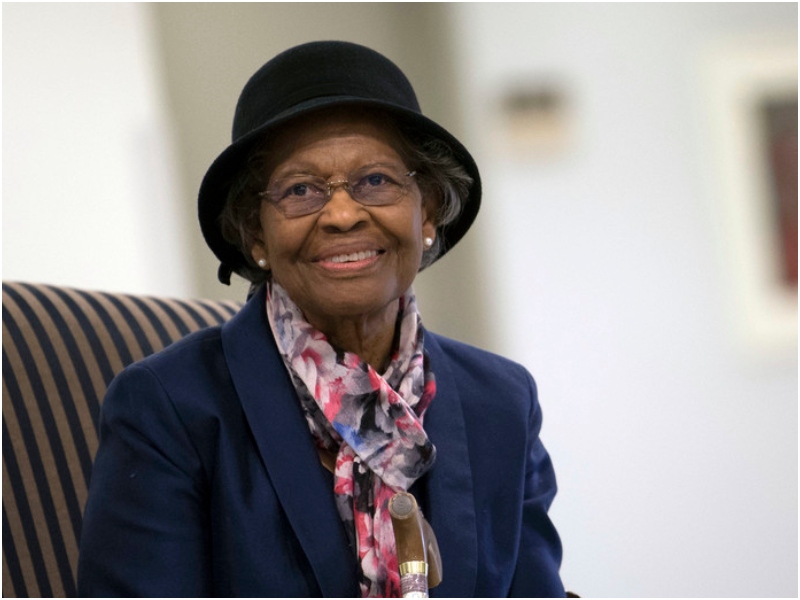
Her work, commissioned by the U.S. Department of Defense, solved one of the century’s greatest scientific challenges: How do you map a spinning, tilted, gravitationally warped sphere hurtling through space with pinpoint accuracy?
For decades, West’s genius went unrecognized outside of military circles. Her contribution was overshadowed by the social barriers of her time, much like the “Hidden Figures” who helped NASA reach space. But in 2018, she finally received overdue acknowledgment when she was inducted into the Air Force Space and Missile Pioneers Hall of Fame.
Today, every “turn left” your GPS gives, every Uber ride you order, and every satellite-guided rescue mission owes a silent debt to Dr. Gladys West, the mathematician who taught computers to understand our planet.
As one admirer put it online: “Every time you use GPS, you’re relying on a Black woman from a Virginia farm who thought she was just doing math homework.”