
A decades-old language guide once used in American classrooms is drawing renewed attention after an 85-year-old retired teacher shared her experience preserving the document for nearly 60 years.
The guide, focused on African American Vernacular English (AAVE), was originally distributed in the late 1960s to help educators better understand the speech patterns of Black students during a period of school integration.
The retired teacher, who began her career in 1962 and taught for four decades, said the booklet was presented as a resource for educators navigating newly integrated classrooms.
“I remember a teacher getting up in a meeting saying it was their dictionary for Black students,” she recalled. “So I assumed they came up with this little booklet… so that teachers could understand the way a Black student would pronounce something or say a word.”
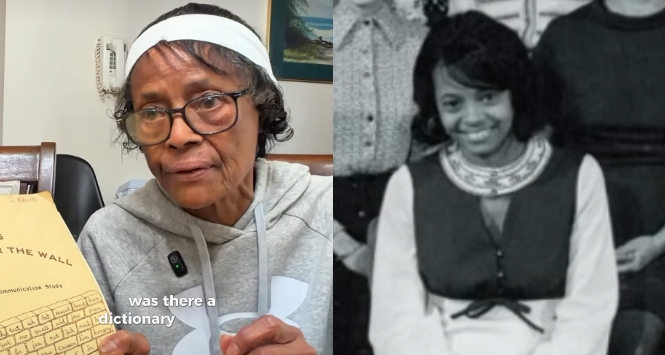
The guide reflects a moment in U.S. education history when Black teachers were increasingly placed in predominantly white schools following desegregation efforts.
The grandmother noted that her early years in the classroom marked her first time teaching white students.
“I started teaching in 1962… and that was my first time,” she said, referencing the broader shifts in the education system during that era.
While the booklet may have once been considered a routine teaching aid, its preservation has taken on new significance as discussions around language, culture, and representation continue to evolve.
“I kept it because it had information on the way certain Black children said things,” she explained. “It is information and things that I was given back then—I just made like a little library, really.”
The document is now being viewed by some as a rare physical record of how Black American speech was documented and interpreted during the mid-20th century, a time when linguistic diversity was often misunderstood or stigmatized in formal education settings.
Despite its current historical value, the grandmother said she never anticipated the guide would become an artifact.
“I did not,” she said. “It took me back… when you bring out things that I kept for so long.”
She offered simple advice for others when it comes to preserving history:
“It pays… if you have something that you may think isn’t worth anything… sometimes it’s best to put it aside.”
The resurfacing of the guide has sparked broader conversations online about the importance of preserving cultural materials and recognizing the historical context in which they were created.

