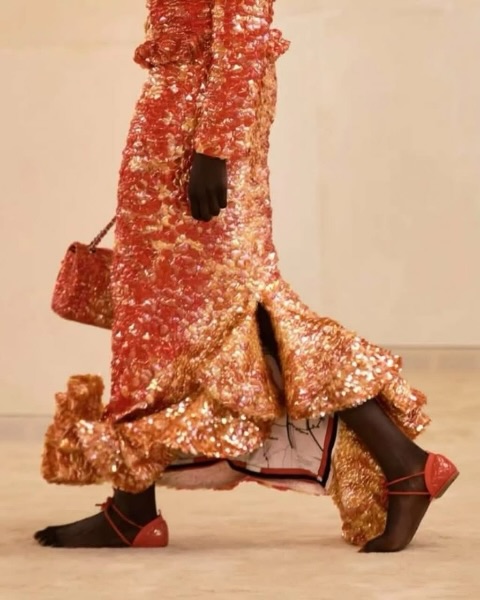
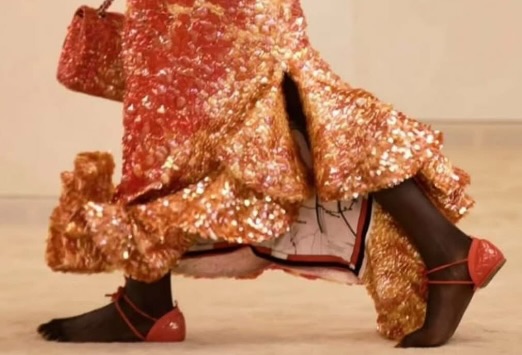
Chanel’s Cruise 2026 runway show delivered plenty of conversation-worthy moments, but few sparked as much debate as the brand’s barely-there barefoot-inspired sandals. Introduced under the creative direction of Matthieu Blazy, the unusual footwear reduced the idea of a shoe to its absolute minimum, featuring sculpted heel coverings and nearly invisible construction that created the illusion of walking barefoot across the sand-covered runway.
The daring designs immediately fueled online discussions about where fashion ends and practicality begins. Some praised the collection for pushing creative boundaries and embracing fashion’s growing obsession with minimalism, while others questioned whether the sandals were wearable outside of a runway presentation.
The designs arrive at a time when “less is more” aesthetics continue dominating both luxury and streetwear fashion. Over the past few years, unconventional footwear silhouettes have steadily gained attention, from Vibram FiveFingers’ toe-shaped shoes to Balenciaga’s ultra-flat Zero sandals. Chanel’s version takes the trend even further, stripping footwear down until it almost disappears entirely.
For many Black fashion lovers, the conversation surrounding the sandals goes beyond shock value. Fashion within Black culture has long balanced creativity with functionality, especially in communities where personal style often doubles as self-expression, cultural identity, and social statement. While avant-garde runway pieces may not always translate directly into everyday wear, they frequently influence mainstream trends that eventually appear in more accessible forms.
Social media reactions reflected this divide. Some users admired the sandals as wearable art, celebrating the boldness of the concept and Chanel’s willingness to experiment. Others joked that the designs looked unfinished or impractical for real life, especially in cities where comfort and durability matter as much as aesthetics.
Still, fashion historians and trend watchers note that runway collections are often meant to provoke conversation rather than provide immediate everyday solutions. Many once-ridiculed fashion ideas, from oversized silhouettes to transparent heels, eventually found their place in mainstream wardrobes after being reinterpreted for daily life.
Chanel’s barefoot-inspired sandals may never become a universal closet staple, but they successfully achieved what high fashion often aims to do: spark discussion, challenge expectations, and redefine familiar ideas. Whether viewed as artistic innovation or excessive minimalism, the collection highlights fashion’s ongoing fascination with reducing design to its purest form.
For now, the sandals remain a symbol of fashion’s willingness to test limits, even if the rest of the world is still deciding whether less can truly be more.