
Erin Jackson’s story is one for the history books. Growing up in Ocala, Florida, Jackson had no access to ice or snow—but she did have wheels.
A world-class inline skater, she racked up 47 national titles and 12 world championship medals, dominating a sport that isn’t even part of the Olympics.
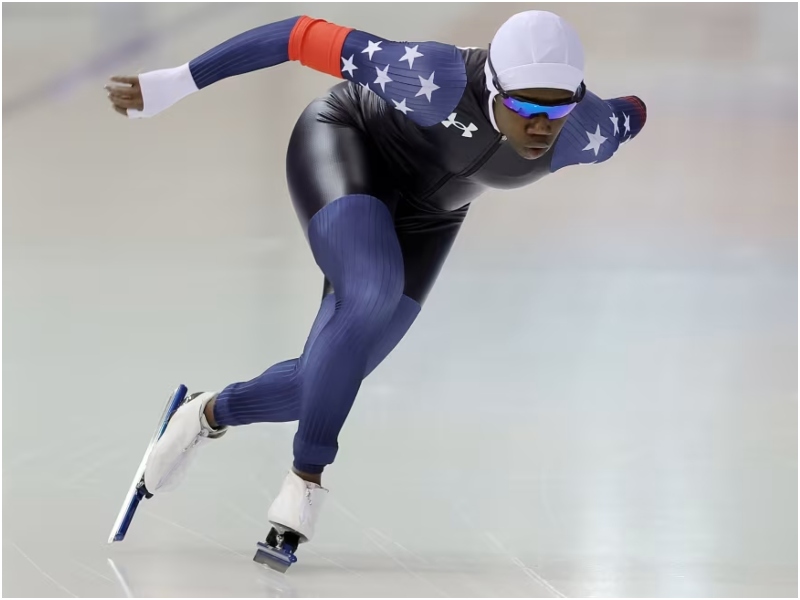
In 2016, Jackson made a bold move: she switched to ice speed skating. The transition was anything but easy.
“No wheels, no friction, no forgiveness,” she later explained of the ice.
Yet within just four months, she qualified for the 2018 Winter Olympics. Though she finished 24th in the 500 meters, the race became a benchmark for what was possible.
By the 2022 Winter Games, Jackson was ranked number one in the world, but a stumble during Olympic trials nearly derailed her dream. It was a teammate’s extraordinary act of sportsmanship—Brittany Bowe gave up her spot—that allowed Jackson to compete. And she made it count.
On February 13, 2022, Jackson skated the 500 meters in 37.04 seconds, claiming Olympic gold and rewriting the record books.
Jackson’s journey is more than a tale of athletic talent; it’s a story of resilience, adaptability, and the power of teamwork. From the sunny streets of Florida to the frozen Olympic ice, she has shown that boundaries—geographical, physical, or psychological—can be overcome with determination and grit.
Her triumph is historic: Erin Jackson became the first Black woman to win a gold medal in individual speed skating at the Winter Olympics, cementing her legacy in both sports and cultural history.

