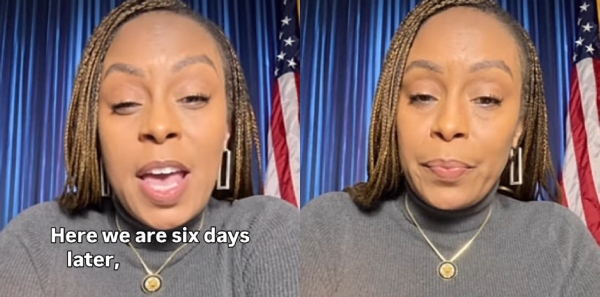
U.S. Representative Shontel Brown warned that “the American people do not want another extensive and endless war” as the United States House of Representatives narrowly rejected a measure aimed at blocking further military action in Iran without congressional approval.
The war powers resolution, designed to curb the authority of Donald Trump to continue military operations against Iran, failed on March 5 in a 219–212 vote, reflecting sharp divisions in Congress over the president’s decision to initiate military action.
Republicans—who hold a narrow majority in the House—largely voted against the measure, preventing Democrats from advancing the resolution that would have required explicit authorization from Congress for any additional attacks.
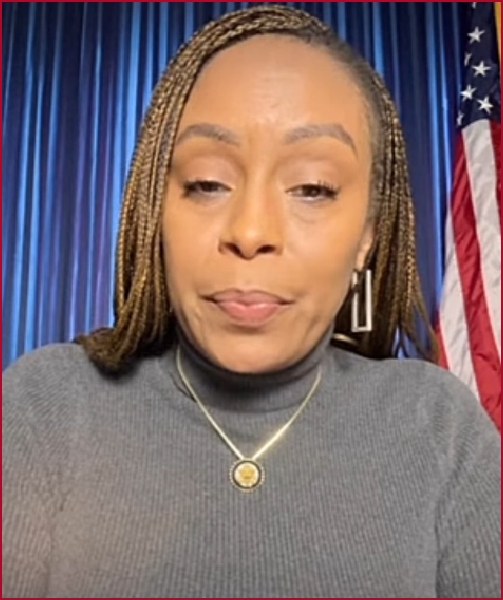
Brown: ‘We Still Don’t Know Why We’re at War’
In a video posted on social media ahead of the vote, Brown sharply criticized the administration’s handling of the conflict.
“Right now, missiles are flying across the Middle East because Trump decided to start a war this weekend,” she said.
“Here we are, six days later, and we still don’t know why we’re at war with Iran. We don’t know what we’re trying to accomplish, and we don’t know how this is going to end.”
Brown also argued that the president launched the military action without the approval of Congress, calling the move unconstitutional and warning it risks drawing the United States into another prolonged overseas conflict.
Polling Among Constituents
The Ohio Democrat said opposition to the war is widespread among voters in her district.
“When I polled my constituents, 85% said they do not approve of Trump’s war,” she said, adding that the conflict is not supported by many residents in Northeast Ohio.
Brown said the resolution was intended to reaffirm Congress’s constitutional authority over war powers and force the administration to seek approval before expanding military operations.
Congressional War Powers Debate
The vote highlights an ongoing debate in Washington about the limits of presidential military authority.
Under the War Powers Resolution of 1973, the president can deploy U.S. forces into hostilities without prior congressional authorization only for a limited period. Congress can pass resolutions directing the president to withdraw troops or halt military actions that lack legislative approval.
Democrats backing the measure argued that Trump’s actions risk escalating conflict in the Middle East without a clearly defined objective or exit strategy.
“This is where Congress comes in,” Brown said in her remarks. “It is time for my colleagues on the other side of the aisle to stop being a rubber stamp and start doing their jobs.”
Political and Strategic Implications
Although the resolution failed, the close vote signals significant concern within Congress about the scope of the administration’s military strategy.
The defeat also means Trump retains the authority to continue military operations unless Congress passes a new measure capable of overcoming both Republican opposition and a potential presidential veto.
For critics like Brown, the outcome raises fears of deeper U.S. involvement in another Middle East conflict.
“Trump promised to end all wars,” she said. “But now he’s dragged us into another one.”