
As Black History Month continues to spotlight innovators whose work reshaped modern life, the legacy of Dr. Patricia Era Bath is a worthy reminder of how scientific brilliance can transform both medicine and global industry.
In 1981, Dr. Bath, an American ophthalmologist and laser scientist, conceived a revolutionary technology known as laserphaco—a minimally invasive, laser-based method capable of performing every critical step of cataract removal. At a time when cataract surgery relied heavily on manual techniques, her approach marked a seismic shift in eye care.
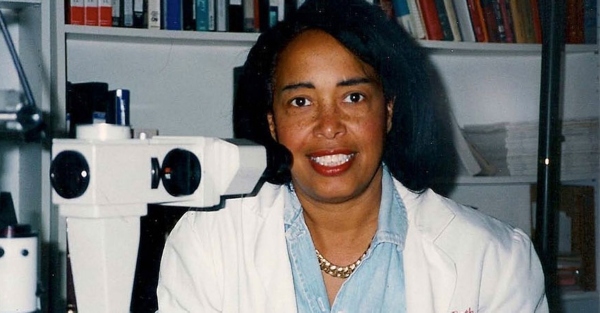
Dr. Bath published her first academic paper detailing the technique in 1987, and a year later, in 1988, she made history by becoming the first Black woman physician to receive a U.S. medical patent.
The achievement was groundbreaking not only for its scientific merit but also for its significance in a field where Black women had long been excluded from recognition and resources.
By 2000, laserphaco technology had gained international adoption, with hospitals and clinics across Europe and Asia using the method to restore sight to patients—many of whom had been blind for years. The innovation helped accelerate the evolution of modern laser eye surgery, now a cornerstone of the multi-billion-dollar global ophthalmology industry.
Dr. Bath’s contributions extended far beyond invention. While working in underserved communities, she documented stark racial disparities in vision loss, particularly among Black patients. Her findings led her to pioneer the concept of Community Ophthalmology, a public health approach that combines medical innovation with outreach, prevention, and access to care for marginalized populations.
Through this work, Dr. Bath demonstrated that blindness was not simply a biological issue but often a social one—shaped by inequality, poverty, and limited access to healthcare. Her advocacy helped influence policy discussions and broadened the scope of ophthalmology from treatment alone to prevention and equity.
Today, cataract surgery and laser-based vision correction are standard procedures worldwide, supporting a global medical economy worth billions. At its foundation lies Dr. Bath’s early vision—both literal and figurative.
As Black History Month honors those who built industries while breaking barriers, Dr. Patricia Bath’s legacy remains clear: she did not just advance medicine. She changed how the world sees—medically, socially, and economically.

