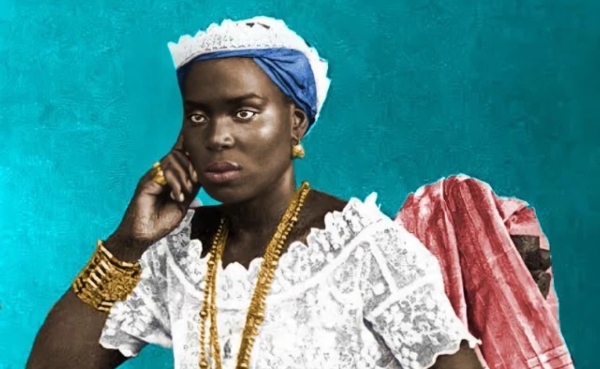
As we commemorate Black History Month, it’s important to recall not only the widely known figures of resistance but also those whose stories have been less celebrated yet deeply foundational.
One such figure is Princess Aqualtune, a warrior, strategist and symbol of resilience in the face of conquest and enslavement.
From the Kingdom of Kongo to Colonial Brazil
According to historical traditions and oral history, Aqualtune was born a princess of the Kingdom of Kongo in the 17th century, the daughter of an unnamed Manikongo (king). She is said to have led an army of about 10,000 men and women in the Battle of Mbwila against Portuguese forces in 1665 — a fierce defense of her homeland during the height of European colonial expansion in Central Africa.
When the Kongo forces were defeated, Aqualtune was captured by Portuguese troops. Enslaved alongside many others from her community, she was transported across the Atlantic to Recife in colonial Brazil — a primary hub in the trans-Atlantic slave trade. There, she was sold into brutal conditions, reportedly as a slave breeder, a designation intended by slaveholders to extract reproductive labor from captives.
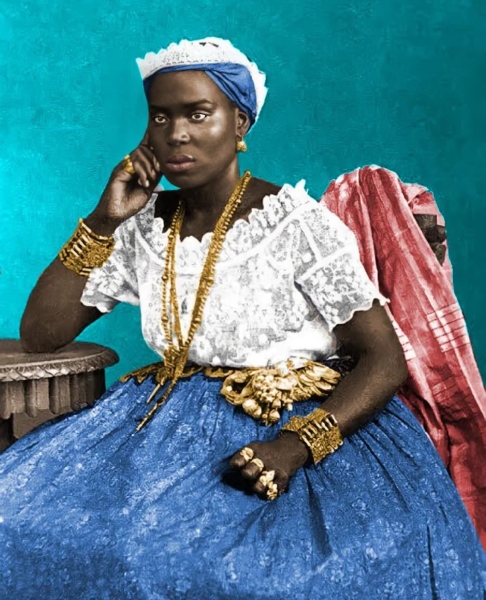
Escape and Leadership in Palmares
Despite the dehumanization of slavery, Aqualtune’s leadership and strategic acumen endured. Pregnant and enslaved in the sugar-producing region near Porto Calvo, she heard stories of Quilombo dos Palmares, a sprawling community of runaways resisting colonial domination and slavery.
According to tradition, she organized an escape with a group of captives and fled to Palmares, where her noble lineage and experience quickly elevated her to a position of authority.
In Palmares, Aqualtune became a central figure in the political and military structures of the quilombo — a self-governing community organized around principles of freedom and collective defense. Historians note that one of the major mocambos (villages) within the federation was associated with her name, and that she was a matriarchal force in the consolidation of what was effectively a Black republic in colonial Brazil.
Mother and Ancestor of Resistance Icons
Aqualtune’s legacy extends through her children. She gave birth to at least three children: Ganga Zumba, Gana Zona, and Sabina, the latter of whom became the mother of Zumbi dos Palmares — arguably the most iconic leader of Palmares whose bravery against Portuguese imperial forces has been enshrined in Brazilian collective memory.
Ganga Zumba would later assume leadership of the quilombo’s central settlement, while Zumbi became one of the most celebrated symbols of resistance against slavery in the Americas.
The Legacy of Palmares: Freedom Against the Odds
Quilombo dos Palmares — also known as Angola Janga — was more than a refuge: it was a political and military entity. At its peak, its settlements housed perhaps tens of thousands of Africans, Native Americans and escaped slaves, and it successfully withstood repeated Portuguese military incursions for nearly a century.
Aqualtune’s role in this story reminds us that resistance to slavery was not only about escape — it was also about building resilient, self-determined communities. Even though primary documentary evidence about Aqualtune’s life remains limited and partly rooted in oral tradition, her presence in the lore of Palmares and in the genealogies of its leaders underscores her enduring importance in Afro-Brazilian history.
Remembering Her Today
While figures like Zumbi are widely recognized in Brazil — with national holidays commemorating his legacy — Aqualtune’s story has only recently received broader scholarly and cultural attention.
Today, researchers, cultural institutions and activists highlight her as an example of African female leadership, military strategy and unwavering resilience in the face of both colonial conquest and the horrors of the trans-Atlantic slave trade.
,