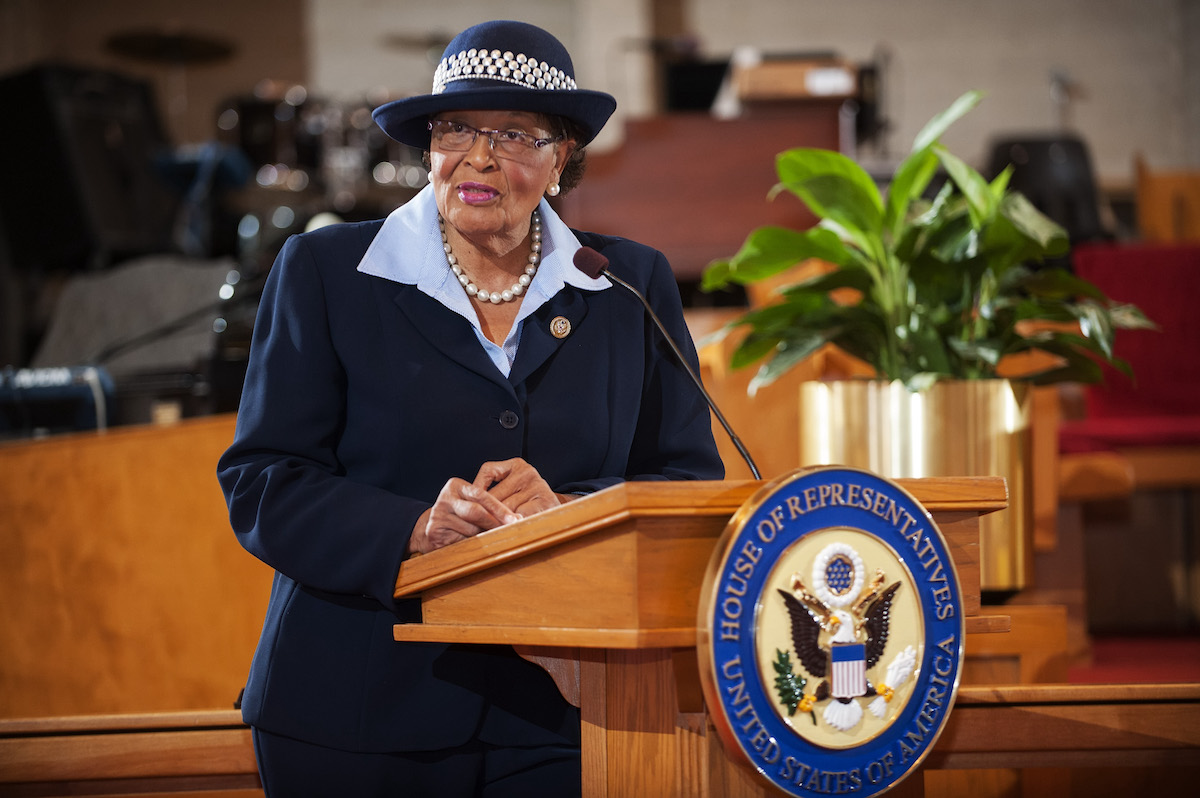
An opinion piece written by Rep. Alma Adams (D-NC) warning about the fallout from tensions in the Strait of Hormuz argues that a crisis unfolding thousands of miles away is already driving up costs for American families.
The op-ed, written against the backdrop of growing instability in the Middle East, centers on the Strait of Hormuz, a narrow waterway between the Persian Gulf and the Gulf of Oman through which nearly one-fifth of the world’s oil supply passes. Any disruption there, the writer argues, quickly sends economic tremors across the globe.
The piece links those international tensions directly to rising prices in North Carolina and across the United States. According to the op-ed, Americans are already paying more for gasoline as global energy markets react to uncertainty in the region. Higher fuel prices are also affecting airlines, shipping companies and freight carriers, pushing up the cost of travel and everyday goods.
“Those costs do not stay in the supply chain,” the writer says. “They reach consumers.”
The op-ed places particular emphasis on agriculture, arguing that farmers may be among the groups hit hardest if oil prices continue to rise. Fertilizer prices are closely tied to energy costs, and the writer warns that more expensive fertilizer could increase the cost of growing food.
That burden, the op-ed argues, would fall especially heavily on Black farmers and rural communities, many of whom are already operating with thin margins. A spike in fuel and fertilizer costs could make it even more difficult for those communities to sustain their livelihoods.
Beyond food and fuel, the piece broadens into a larger critique of national priorities. As lawmakers weigh the possibility of increased spending tied to conflict abroad, the writer argues that domestic concerns, particularly health care, should remain at the forefront.
The timing is significant. Monday marks the anniversary of the Affordable Care Act, and the op-ed points to rising health care costs as another pressure facing American families. Rather than allowing international tensions to overshadow those concerns, the writer argues that Congress should focus on extending enhanced Affordable Care Act premium tax credits and lowering health care costs.
In the end, the op-ed presents the Strait of Hormuz not as a distant geopolitical flashpoint, but as a thread tugging at daily life in the United States. Its central argument is that the price of instability abroad can be measured not only in foreign policy terms, but in the cost of gas, groceries and a doctor’s visit here at home.