The longest government shutdown in U.S. history may be over, but for many Black federal workers, the damage has already been done.
NBC News reports that thousands of African American employees have been laid off or placed on administrative leave since the shutdown began, reigniting concerns about racial inequities within the federal workforce. The federal workforce was once considered a pillar of Black middle-class stability.
Denise Joseph, a former Department of Education employee, described her termination as “devastating.” After nearly a decade of service, she was let go just one day after the presidential inauguration.
“I thought it was a joke,” Joseph told NBC. “I believed my job was secure — I planned to retire there.”

Joseph is not alone.
Federal data shows that as of late last year, nearly one in five federal employees identified as Black or African American. But following the Department of Government Efficiencies’ “reduction in force” policies, thousands of jobs have disappeared — many from departments with historically diverse workforces, such as Education, Energy, and Housing.
Economists warn that these job losses could have lasting ripple effects, particularly for Black women, who make up a significant portion of federal administrative and mid-level management roles.
According to NBC’s reporting, Black unemployment rose 1.5 percentage points between February and August — more than any other demographic group during the shutdown.
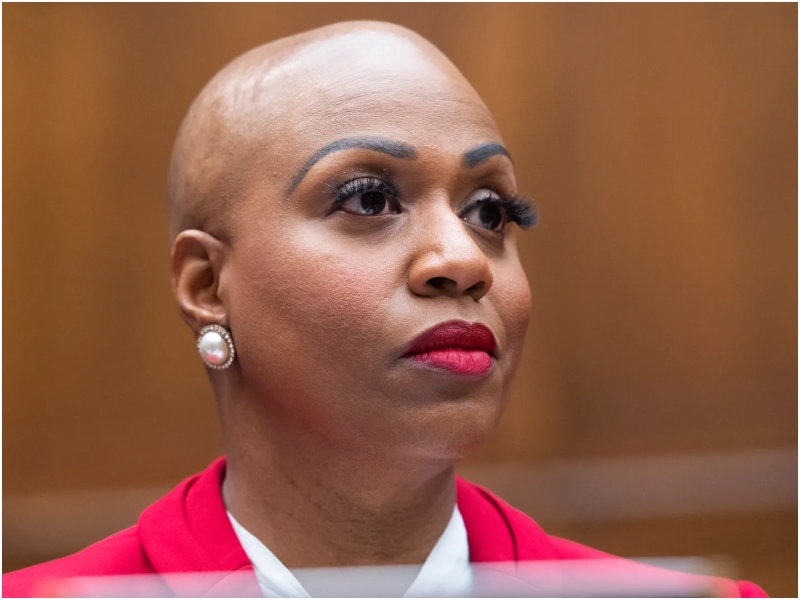
Representative Ayanna Pressley (D-MA) has publicly called on Federal Reserve Chair Jerome Powell to take action, urging the Fed to “use all available tools” to stabilize employment, especially for Black women disproportionately affected by government workforce reductions.
“The federal government has long been a gateway to economic mobility for Black families,” Pressley’s office said in a statement to NBC. “To see that foundation crumble under partisan maneuvering is unacceptable.”
The shutdown — which lasted 43 days — officially ended Wednesday, Nov. 12, 2025, when President Trump signed a funding package extending federal operations through January 30. But for many, the relief feels hollow.
Bobby Boyd, who spent decades at the Department of Energy before his entire unit was eliminated, called the experience “traumatizing.”
“My goal was to retire from federal service,” Boyd said. “To have that stripped away — for nothing I did — it’s a ball of emotions from day one.”
Similarly, Nina Allen, once an executive coach at the Department of Education, has since moved into the private sector, saying the loss of her federal job forced her to “start over at 50.”
Economists warn that late-career transitions like Allen’s often mean reduced pensions, lower lifetime earnings, and delayed retirements — a potential setback for Black professionals who spent decades climbing the ranks in public service.
While the shutdown may have ended, its aftershocks are still being felt across the country — and within the Black community, a painful question remains: what happens when the system once viewed as a safe haven no longer feels secure?