
Sinéad Bovell, the futurist and founder known for demystifying emerging technology for younger workers, is urging people to rethink how they define themselves in a world being rapidly reshaped by artificial intelligence.
Her latest Instagram post and episode of I’ve Got Questions cuts to the heart of the disruption: if job titles vanished tomorrow, what value could you prove you bring?
It is the kind of question that exposes a growing truth across industries—from tech and finance to healthcare and media. The workforce is shifting from a world organized around fixed roles to one centered on flexible, demonstrable skills, and workers are being pushed to rethink what they offer beyond the label on their business card.
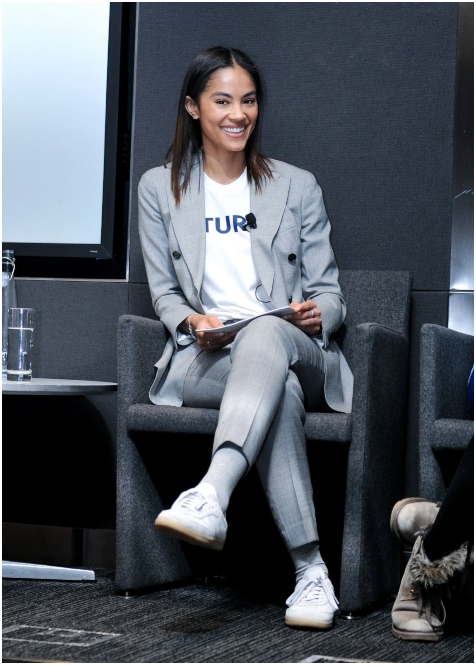
Bovell argues that AI is accelerating this shift. As machine capabilities expand, companies are reimagining what tasks require people at all. That means the skills in demand today may not be the ones needed 12 or 18 months from now. This volatility, Bovell warns, complicates traditional full-time hiring and pushes economies toward what she calls the “independent era”—a period defined by project-based work, fluid teams, and more frequent career pivots.
In her video, she explains the stakes clearly: AI will keep learning new “tricks,” altering the problems companies aim to solve and the products they can build. That reality forces workers to anchor themselves not in titles, but in the specific outcomes they make possible.
Alongside the warning comes a roadmap. Bovell outlines seven “non-negotiable” skills for the AI era—capacities she says will remain essential no matter how quickly automation evolves. While the full list is shared in her episode, Bovell notes these skills are grounded in adaptability, problem-solving, communication, and the ability to work alongside intelligent systems rather than compete with them.
Her message resonates far beyond the tech sector. Nations worldwide are wrestling with the implications of AI on labor markets, education systems, and economic security. The shift toward independent, skills-driven work raises difficult questions about health insurance, social protection, and income stability—issues Bovell promises to address in future episodes.
For now, her challenge is simple but profound: imagine yourself as a one-person organization. What do you offer? What problems do you solve? What results do you consistently deliver?
It is a reframing that speaks to workers in the United States, Africa, Europe, Asia, and everywhere AI is reshaping opportunity. And for a generation navigating uncertainty, Bovell’s call to prepare “ahead of time” is quickly becoming less of an option and more of a necessity.


