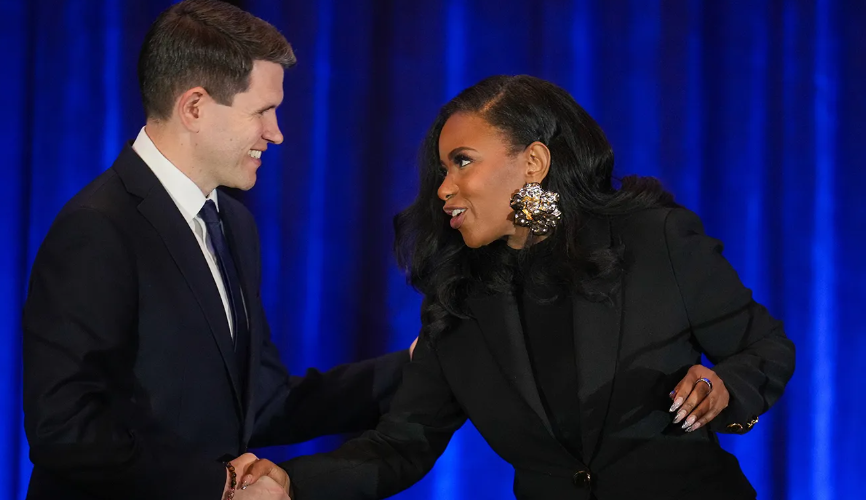
In the final stretch of Texas’ closely watched Democratic Senate primary, Rep. Jasmine Crockett has escalated her criticism of rival James Talarico, accusing him of benefiting from ads she describes as “straight up racist.” Crockett has also dismissed persistent questions about her viability in a deeply red state as a “dog whistle” meant to demean her as a Black woman.
The dispute has drawn in other party figures. According to a recent report in The Washington Post, the Democratic nominee who challenged Sen. Ted Cruz in 2024 endorsed Crockett and accused Talarico of privately referring to him as a “mediocre Black man,” an allegation Talarico denies. He has said he did not criticize anyone based on race and notes that candidates cannot coordinate with super PACs, which operate independently.
As the two Democrats face off in the March 3 primary, race and gender have become defining undercurrents in a contest that could have national implications. With Texas remaining elusive for Democrats for decades, some party strategists believe flipping the state is critical to any path back to a Senate majority. At the same time, many are wary of reigniting identity-focused debates that some blamed for setbacks in 2024, when economic concerns dominated voter priorities.
Crockett, 44, has built her brand as a combative and high-profile critic of President Donald Trump and other Republicans. She argues that her candidacy can energize core Democratic voters, particularly Black Texans, among whom she holds a commanding polling lead. Latino voters, who are expected to make up the second-largest share of primary voters, appear more divided — a dynamic that could prove decisive.
Talarico, 36, a state representative and Presbyterian seminarian, has positioned himself as a coalition-builder capable of appealing to independents and moderate Republicans. He has largely avoided direct personal attacks, instead calling for lowering the temperature and uniting Democrats ahead of a challenging general election.
Whichever candidate prevails will need to consolidate a diverse party coalition — and demonstrate an ability to compete in a state that Trump carried by more than 13 percentage points.