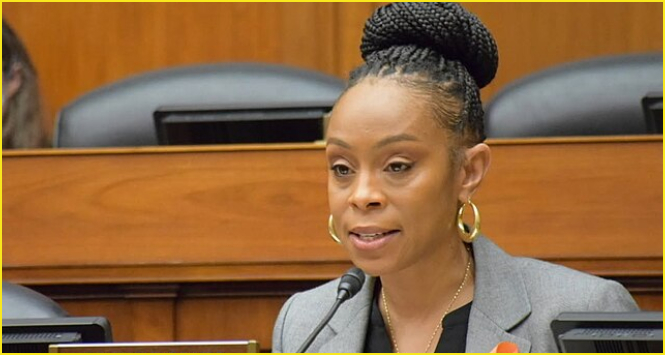
U.S. Rep. Shontel Brown is sounding the alarm over proposed voting legislation, calling the SAVE Act a direct threat to Americans’ access to the ballot—particularly for women.
The Trump-backed Safeguard American Voter Eligibility Act (SAVE Act) requires individuals to provide documentary proof of U.S. citizenship when registering to vote in federal elections.
In a video shared on Instagram, Brown delivered a pointed critique of the bill, describing it as “the new-age poll tax” and warning that it could roll back hard-fought voting rights protections.
The poll tax in American history was a fee required to vote, primarily used in the post-Reconstruction South to disenfranchise African Americans and poor whites. As a key “Jim Crow” law, it acted as a barrier to voting, frequently paired with literacy tests. These taxes were finally eliminated in federal elections by the Twenty-fourth Amendment in 1964.
“Attacking women’s rights with this horrible SAVE Act during Women’s History Month is a low blow,” Brown said, adding that the legislation goes beyond gender and could impact “the right to vote for all of us.”

Key Concerns Raised
Brown outlined several provisions she believes could significantly restrict voter participation. Among the most striking claims, she said the bill could disproportionately affect married women who have changed their last names.
“If your birth certificate doesn’t match your other IDs, your state might not let you register to vote,” she explained.
She also warned that millions of voters could be removed from state voter rolls without their knowledge, potentially discovering their registration status only when attempting to vote.
Additionally, the legislation could eliminate online and mail-in voter registration, requiring in-person registration—a change Brown argued would burden working Americans, parents, and those living far from election offices.
The bill’s identification requirements also drew criticism. According to Brown, standard driver’s licenses may no longer suffice, with voters required to present enhanced IDs, passports, or birth certificates—documents not universally accessible.
Historical Parallels and Political Tensions
Brown drew a stark historical comparison, likening the proposed restrictions to discriminatory practices once used in the American South.
“This is just like when Southern states made it harder for Black and Brown folks to vote… those unfair rules were called poll taxes,” she said. “The SAVE Act is the new-age poll tax.”
The legislation has intensified partisan divisions in Washington, with Democrats opposing the measure and Republicans pushing for its advancement in the Senate. Brown noted that she voted against the bill in the House and warned that efforts are underway to secure its passage at the upper chamber.
Her remarks also referenced broader political maneuvering, including allegations that Donald Trump is backing efforts to change Senate rules to facilitate the bill’s approval.
Broader Debate on Voting Access
The controversy surrounding the SAVE Act reflects a larger national debate over election integrity and voter access. The Trump administration argues such measures are necessary to secure elections, while critics contend they risk disenfranchising vulnerable populations.
Brown’s comments have resonated with voting rights advocates, particularly as discussions unfold during Women’s History Month—a time when issues of representation and civic participation are often highlighted.
As the bill moves through the legislative process, its fate could have significant implications for voter registration practices and access to the ballot box across the United States.
The bill, as of late March, has passed the House of Representatives. It is now facing its next, and more challenging, hurdle in the Senate, where it faces debate and potential obstacles regarding filibuster rules.