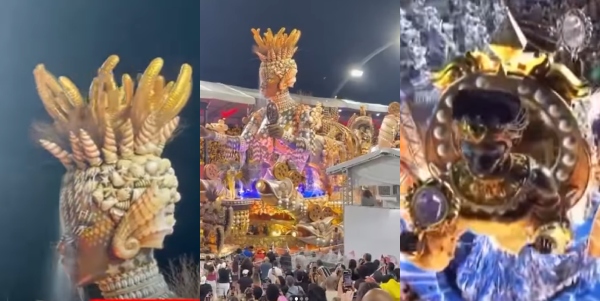
Afro-Brazilian heritage took center stage at the 2026 São Paulo Carnival as Yoruba spiritual traditions were prominently honored, culminating in a winning parade performance celebrating Yemoja, the revered orisha associated with water and motherhood.
The championship entry came from samba school Mocidade Alegre, whose elaborate float dedicated to Yemoja captured both judges’ scores and public attention at festivities in São Paulo.
A Powerful Cultural Tribute
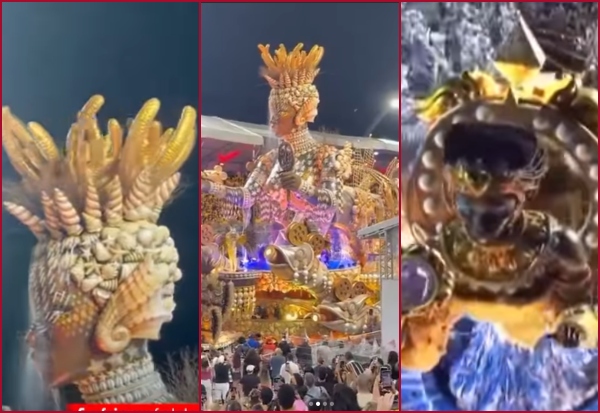
The centerpiece float featured a large symbolic representation of the deity surrounded by flowing blue imagery and carried approximately 10,000 liters of water — an element closely linked to Yemoja’s spiritual significance.
Carnival commentators, speaking in Portuguese during the live procession, described the visual spectacle as a sacred offering brought to life through artistic expression, highlighting the blending of spirituality and performance that defines Brazil’s carnival traditions.
Afro-Brazilian Roots in Carnival
Yoruba-derived religious traditions, brought to Brazil through the transatlantic slave trade, remain deeply embedded in the country’s cultural identity, particularly in samba and carnival storytelling.
Scholars note that honoring orishas in carnival parades reflects both cultural pride and historical remembrance, showcasing the enduring influence of African diasporic traditions in Brazilian society.
Victory for Mocidade Alegre
Judges awarded top honors to Mocidade Alegre, praising the float’s artistic execution, thematic coherence, and cultural authenticity.
The win marks another milestone for the samba school, which is widely recognized for its emphasis on Afro-Brazilian history and spirituality in carnival narratives.
Cultural Significance Beyond the Parade
Observers say the tribute to Yemoja also reflects broader global interest in African-rooted traditions and their diaspora expressions, reinforcing carnival’s role as both entertainment and cultural preservation.
As celebrations concluded, many participants described the performance not only as a visual spectacle, but also as a powerful reaffirmation of ancestral heritage — a reminder that carnival continues to serve as a stage for history, identity, and collective memory.