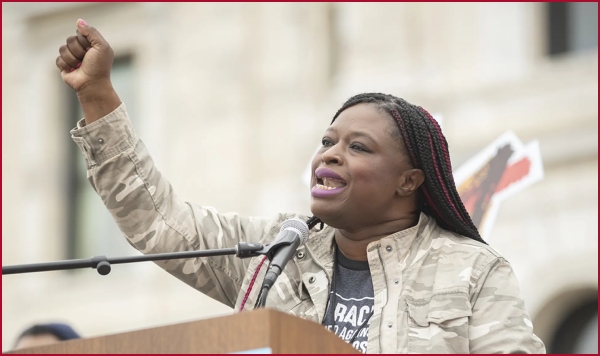
An attorney and activist who helped organize a national boycott of Target Corporation says the campaign is still ongoing, despite recent claims by some public figures that the boycott has ended.
Nekima Levy Armstrong said the movement she launched alongside community leaders Jaylani Hussein and Monique Cullars-Doty has not concluded because the company has yet to meet the group’s demands.
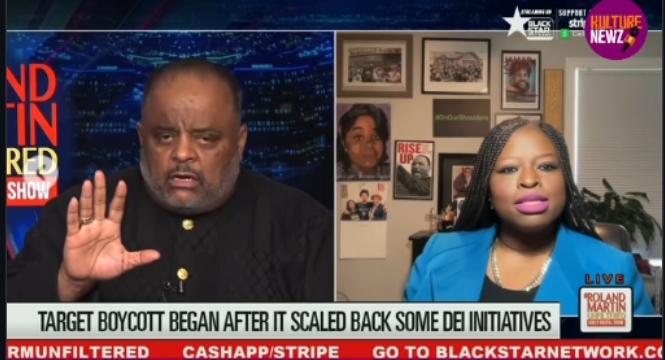
Speaking during an appearance on Roland Martin Unfiltered, Armstrong criticized what she described as attempts by other activists to prematurely declare the boycott over.
“I feel like I just watched a theatrical performance,” Armstrong said during the interview. “The amount of upheaval that has been caused is absolutely absurd for us as a community to be dealing with when we have shown unity in withholding our dollars.”
Dispute Over Who Can End the Boycott
Armstrong specifically rejected statements suggesting that figures such as Jamal Bryant, Nina Turner, and Tamika Mallory have the authority to end the boycott.
She said those individuals were not organizers of the original campaign and therefore cannot decide when it concludes.
WATCH Armstrong’s submissions on Roland Martin Unfiltered here.
According to Armstrong, Bryant recently held a press conference at the National Press Club announcing that the boycott had ended—an action she claims created confusion within the broader movement.
“He knew full well what he was doing,” Armstrong said, referring to the press conference.
Boycott Goals Remain Unmet
Armstrong also stated that the boycott remains active because organizers believe their demands have not yet been satisfied by the Minneapolis-based retailer.
Target, headquartered in Minneapolis, has faced pressure from activists in recent years over corporate policies and community concerns.
Armstrong argued that community unity and consumer spending power have been central to the boycott’s impact.
“We have shown unity and come together by withholding our dollars,” she said.
Consumer Activism and Corporate Accountability
Consumer boycotts have long been used as a strategy to influence corporate decision-making and raise awareness about social and economic issues.
Legal analysts note that such campaigns, while not governed by formal legal structures, often intersect with broader discussions about corporate accountability, free speech, and economic activism.
For now, Armstrong says the Target boycott continues until organizers determine that the campaign’s objectives have been achieved.