
A new generation of Black women scientists, engineers, and leaders is playing a defining role in NASA Artemis Program, the United States’ ambitious effort to return humans to the Moon and pave the way for future missions to Mars.
From mission control to astronaut training and executive leadership, six standout figures are helping shape the future of space exploration while continuing the legacy of trailblazers popularized in Hidden Figures.
At the forefront is Vanessa Wyche, director of the NASA Johnson Space Center. As the first Black woman to lead a NASA center, Wyche oversees critical operations including astronaut training, Mission Control, and development of the Orion spacecraft. Her leadership is central to ensuring astronaut safety and mission success as Artemis missions progress.
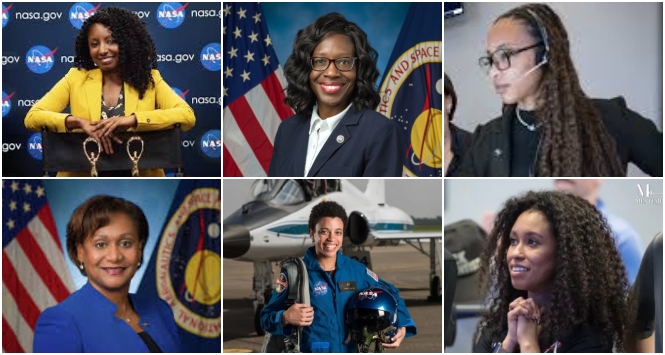
DOWN (L-R): Vanessa Wyche, Jessica Watkins and Amber Alexis Taylor.
Among the astronauts preparing for future lunar missions is Jessica Watkins. Watkins, who previously completed a long-duration mission aboard the International Space Station, is part of the astronaut corps supporting Artemis and is widely seen as a candidate for future Moon landings.
On the scientific front, Amber Alexis Taylor plays a key role in preparing astronauts for the harsh lunar environment. As part of the training cadre for upcoming missions, she helps simulate Moon conditions and ensures crews are equipped with the knowledge needed for exploration and survival.
Inside Mission Control, Kiarre Dumes contributes to the real-time systems that guide Artemis missions. Her work as a flight controller ensures communication and operational integrity during critical phases of spaceflight.
At the executive level, Lakeisha Hawkins provides high-level oversight, helping guide the technical and strategic direction of the Artemis program. Her role underscores the importance of leadership diversity in shaping large-scale scientific initiatives.
Also contributing to the program’s success is Jori Kates, recognized for her work in advancing the technologies and logistics required to support lunar exploration.
Together, these women represent a powerful shift in representation within NASA and the broader field of STEM. Their work is instrumental to one of Artemis’s historic goals: landing the first woman and the first person of color on the Moon.
Beyond technical achievement, their presence signals a broader cultural impact, expanding access, inspiring future generations, and redefining who leads humanity’s next steps into space.

