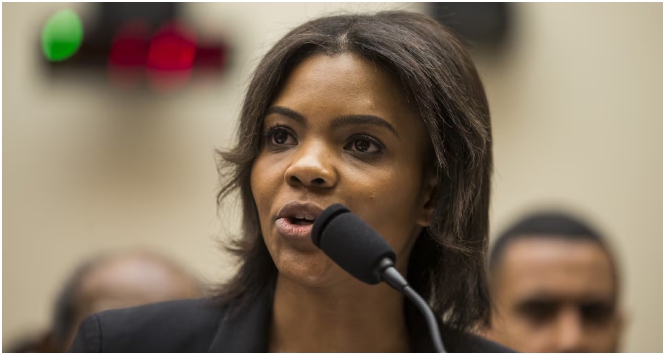
Conservative commentator Candace Owens has ignited a political firestorm after alleging that powerful international actors are “blackmailing President Donald Trump in broad daylight” following the release of newly surfaced Jeffrey Epstein–related emails.
The controversy began when the House Oversight Committee published a batch of internal emails dated November 12 that included references to Trump from Epstein and members of his inner circle.
One message—attributed to Epstein’s brother, Mark Epstein—speculated about whether Russian President Vladimir Putin might possess compromising material on Trump. Another email, allegedly from Epstein himself, claimed he “knew how dirty Donald is.”
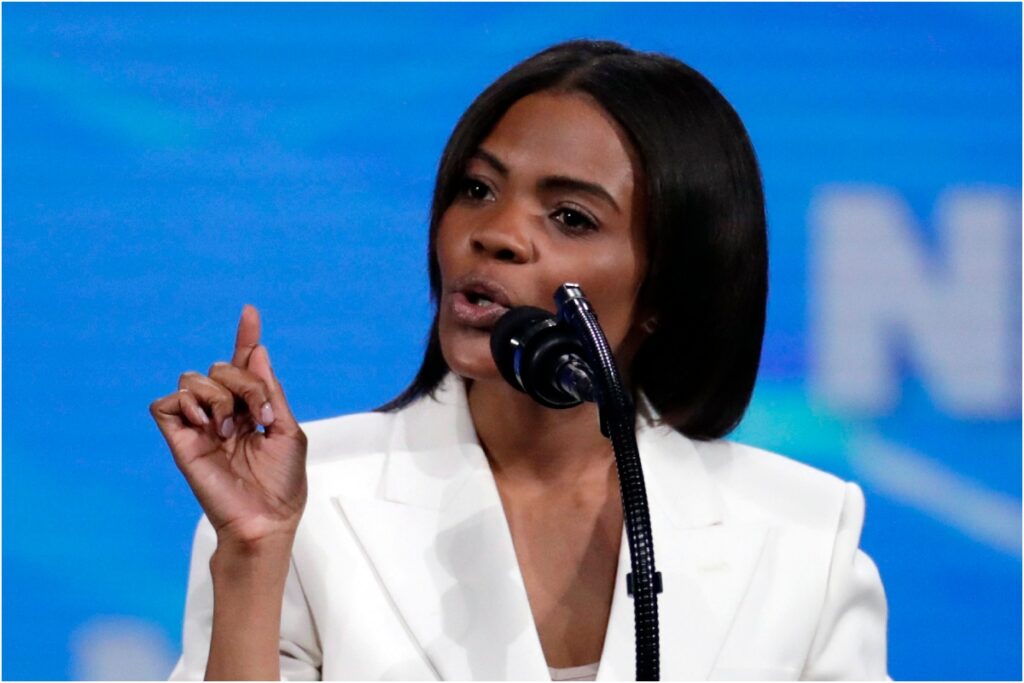
The release triggered a predictable political shockwave across X and other platforms. Then Owens entered the conversation with both feet.
In a series of posts to her 3 million followers, Owens insisted the staggered release of Epstein communications was deliberate, coordinated, and intended to force Trump into compliance with unnamed geopolitical forces. She argued that the slow drip of emails amounted to an orchestrated campaign to control the former president.
Owens went further—much further—by suggesting that Israel, not Trump’s domestic political enemies, orchestrated the effort. She referenced Epstein’s alleged ties to Israeli intelligence but, as critics quickly noted, offered no evidence to support the sweeping claim. Her posts revived recent reports showing that Yoni Koren, an aide to former Israeli Prime Minister Ehud Barak, spent significant time at Epstein’s Manhattan townhouse between 2013 and 2015—facts that, while documented, do not substantiate the larger conspiracy Owens asserts.
Her comments follow a pattern in which Owens has linked high-profile controversies to unproven claims about Israeli interference. After Turning Point USA founder Charlie Kirk’s assassination, she made similar allegations without presenting any documentation. Even some longtime observers of Owens’ commentary say her recent statements mark a notable escalation into conspiratorial territory.
Still, her message resonated strongly within certain conservative circles questioning the political intent behind renewed attention to Epstein’s communications.
Former President Trump, for his part, blasted the resurfacing of Epstein-related chatter as a “hoax,” claiming political enemies are using old, contextless emails to muddy the 2024 campaign landscape. On Truth Social, he announced he would request formal investigations by Attorney General Pam Bondi, the Department of Justice, and the FBI into Epstein’s relationships with high-profile Democrats including Bill Clinton, Larry Summers, and Reid Hoffman. Bondi publicly responded that she was assigning Manhattan U.S. Attorney Jay Clayton to conduct the review.
The political oxygen around Epstein’s legacy—already explosive for years—has now been reignited, this time with added fuel from Owens’ increasingly controversial assertions. As with most narratives involving Epstein, Trump, and geopolitics, the intersection of fact, speculation, and political agenda remains fraught, volatile, and deeply polarizing.