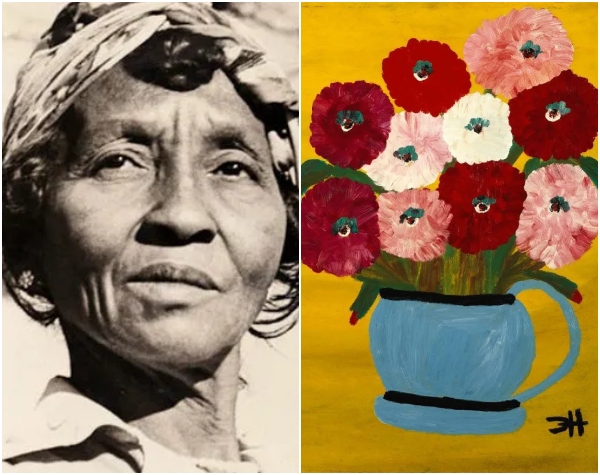
As Black History Month unfolds in February, art lovers and cultural historians are honoring Clementine Hunter, a self-taught African American folk artist whose remarkable body of work captured everyday life in the American South and now holds a place of honor in museums around the world — even if recognition came later in her life.
Born around 1886 or 1887 on Hidden Hill Plantation near Cloutierville, Louisiana, Hunter spent much of her early life working in the fields and as a domestic worker at Melrose Plantation in Natchitoches Parish.
She never had formal schooling or artistic training and did not begin painting until her fifties, when paints left behind by a guest inspired her first piece — a depiction of a baptism drawn on a discarded window shade.
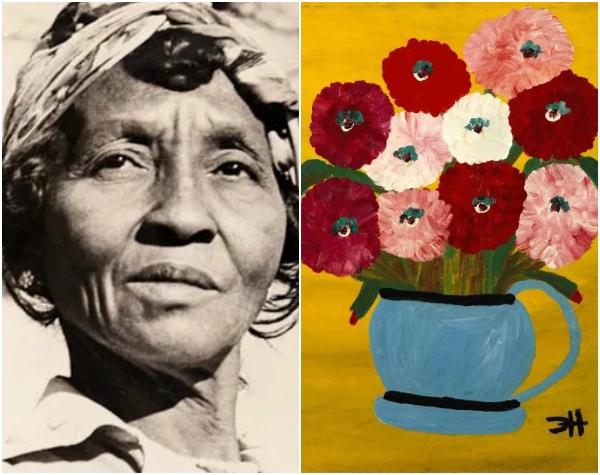
Hunter’s art emerged from memory and personal experience, telling stories of cotton harvests, baptisms, funerals, weddings and other scenes of plantation life, often featuring Black figures rendered in simple profiles and vivid color. She painted on whatever materials were available — including canvas, wood, gourds, bottles and even plastic jugs — after long days of labor, usually at night.
Despite her humble beginnings, Hunter’s talent eventually drew the attention of influential art circles. Her first public exhibition came in 1949, but wider acclaim did not arrive until the 1970s, when major institutions like the Museum of American Folk Art in New York and the Los Angeles County Museum of Art showcased her work.
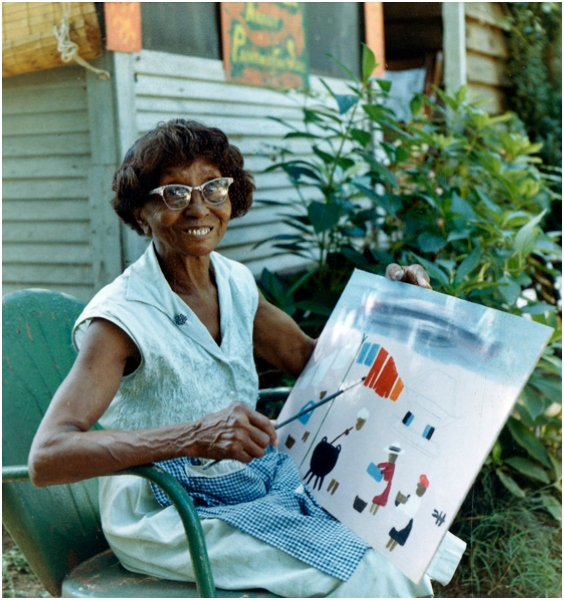
Today, institutions such as the National Museum of Women in the Arts (NMWA) in Washington, D.C., include Hunter’s paintings in their permanent collections, underscoring her contribution to American art. One notable piece at the NMWA is Untitled (1981), a rare self-portrait combining traditional folk imagery with Hunter’s unique visual voice.
Hunter’s story defies conventional art world narratives: she began late in life, taught only by experience and instinct, yet she produced thousands of works over decades and became one of the most celebrated self-taught artists of the 20th century. Her paintings serve not only as artistic expressions but also as visual historical records of African American life in the rural South.
Her legacy continues to inspire. In 2013, the opera Zinnias: The Life of Clementine Hunter brought her story to the stage, and her works are featured in major museum collections across the United States.
As Black History Month honors the artistic, cultural and historical contributions of African Americans, Hunter’s life and art stand as powerful reminders that creativity and voice can emerge from any circumstance — and that art not only reflects life but preserves it for future generations.