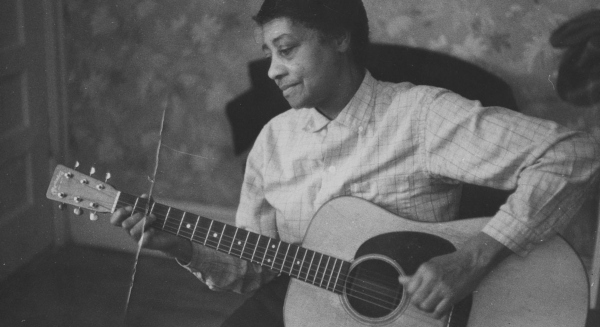
For decades, Elizabeth “Libba” Cotten lived a quiet life far removed from the spotlight — raising her family, working domestic jobs, and keeping her guitar tucked away.
Yet the self-taught musician who once wrote a folk classic as a child would eventually become one of America’s most revered folk artists, winning a Grammy Award at age 90.
Cotten, born in 1895 in Chapel Hill, North Carolina, is best known for writing the timeless folk song “Freight Train” at just 11 years old — a piece that would later become a global standard in American folk music.
A Self-Taught Innovator
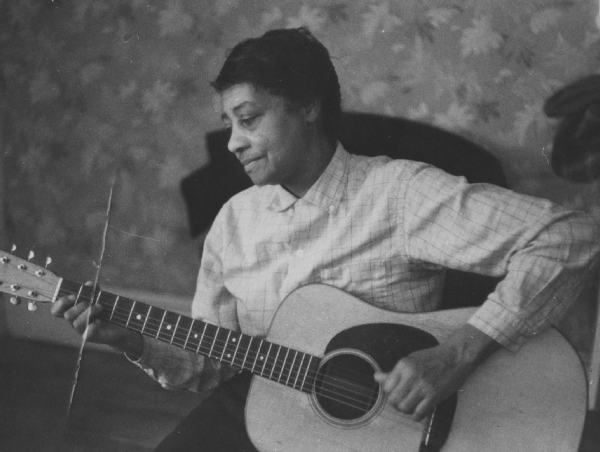
According to Smithsonian Folkways Recordings, Cotten developed a unique playing method as a left-handed guitarist. Instead of restringing her instrument, she simply turned it upside down.
She fretted with her right hand and picked with her left, playing bass notes with her fingers and melody with her thumb — a technique later known as “Cotten style.”
Her sound blended African-American instrumental traditions, country ragtime influences, and folk storytelling — creating a style that proved nearly impossible to replicate.
Music Put on Hold for Decades
Despite her early talent, Cotten stepped away from music for nearly four decades as she focused on raising her family and working to support them.
During that time, her guitar remained largely silent — her music a private passion rather than a public career.
Her life changed unexpectedly in Washington, D.C., when she found and returned a lost child in a department store. The child belonged to the prominent Seeger family, including ethnomusicologist Charles Seeger and composer Ruth Crawford Seeger.
They later hired Cotten as a domestic worker — and eventually discovered her extraordinary musical talent.
A Late-Life Breakthrough
With encouragement from the Seegers — especially folk musician Mike Seeger — Cotten began recording and performing publicly in her 60s.
Her first album, recorded in the late 1950s, helped establish her as an authentic voice in the American folk revival movement.
She went on to perform at major events, including the Newport Folk Festival, and influenced generations of musicians.
Recognition at 90
Cotten’s most remarkable milestone came in 1985 when she won a Grammy Award for Best Ethnic or Traditional Folk Recording for her live album, nearly 80 years after she first began writing songs.
She was also named a National Heritage Fellow by the National Endowment for the Arts, recognizing her as a living treasure of American culture.
Enduring Legacy
Cotten continued performing well into her later years, inspiring countless musicians and fans with both her music and her life story.
Today, “Freight Train” remains one of the most widely performed folk songs in the world — a testament to a woman whose talent endured decades of obscurity before receiving global recognition.
Her journey stands as a powerful reminder that artistic success does not always follow a straight timeline — and that creative gifts can flourish at any stage of life.