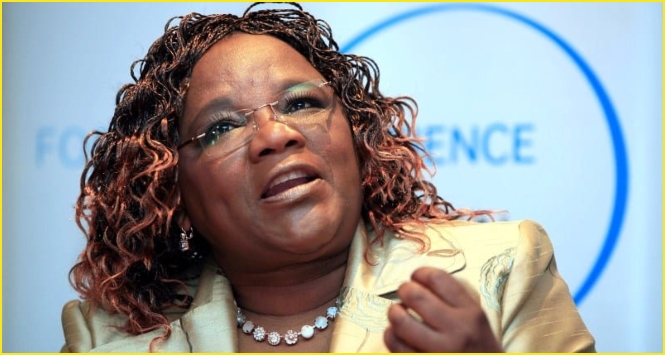
In the hills of Lesotho, a young girl once herded sheep barefoot, her eyes fixed not on the earth beneath her but on the limitless sky above.
That girl, Tebello Nyokong, would go on to become one of the world’s leading chemists — a scientist whose pioneering research could transform the way we fight cancer.
Born in 1951 in a small village in Lesotho, Nyokong’s early life was marked by hardship. She walked miles to school each day, often with an empty stomach and shoes she could not afford. But what she lacked in privilege, she made up for in relentless curiosity and determination.
“I wanted to understand the world beyond the mountains,” she once said. “Science gave me that window.”
Breaking Barriers, Building a Legacy
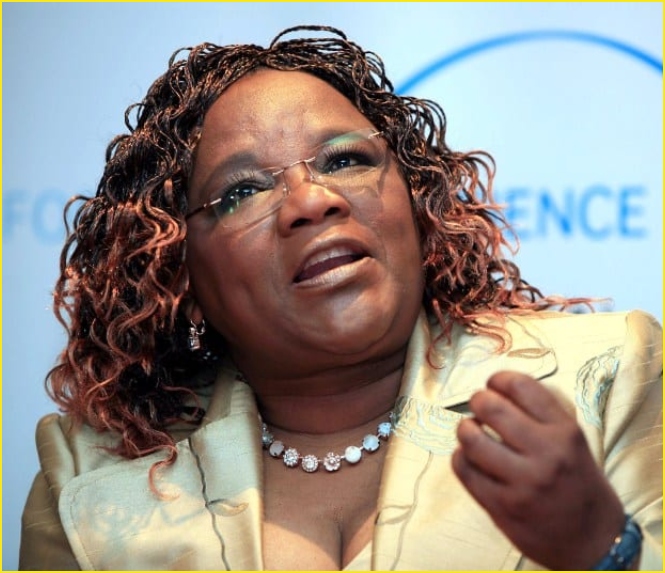
Nyokong’s journey took her from Lesotho’s rural classrooms to laboratories across South Africa, Canada, and eventually to Rhodes University, where she became a full professor of chemistry. There, she built her own high-tech laboratory and assembled a team to research one of modern medicine’s greatest frontiers — photodynamic therapy, a cancer treatment that uses light to activate drugs capable of killing cancer cells with precision.
Her method aims to replace or complement chemotherapy with a far more targeted approach — one that minimizes damage to healthy tissue. In essence, it’s “chemo with a laser focus.”
Today, her work on smart molecules, compounds that react to light to attack tumors, is earning global attention. These innovations have the potential to make cancer treatment less invasive, more effective, and more accessible.
For her groundbreaking contributions, Nyokong has received numerous international honors, including the L’Oréal-UNESCO Award for Women in Science and recognition from the South African National Research Foundation as one of the country’s top scientists.
A Scientist and a Symbol
But what makes Professor Nyokong’s story extraordinary isn’t just her science — it’s her symbolism. In a field still dominated by men and Western institutions, she has become a beacon for African women in STEM.
At Rhodes University, she has mentored countless young scientists, many of them women who, like her, came from backgrounds where science seemed out of reach.
Nyokong’s message to her students is simple but powerful: genius is not the privilege of geography or gender.
“There are brilliant minds in every village,” she says. “They just need someone to believe in them.”
Why the World Should Know Her Name
Despite her towering accomplishments, Nyokong remains relatively unknown outside of academic circles. She is rarely mentioned alongside the world’s most celebrated scientists, though her innovations have the potential to save millions of lives.
Her story is a reminder that science, like talent, knows no borders — and that the next world-changing idea might come from a child studying under a tree in Lesotho, or from a girl in rural Nigeria, or from a classroom in Detroit.
The question isn’t whether there are more Tebello Nyokongs out there. It’s whether we’re looking hard enough to find them.