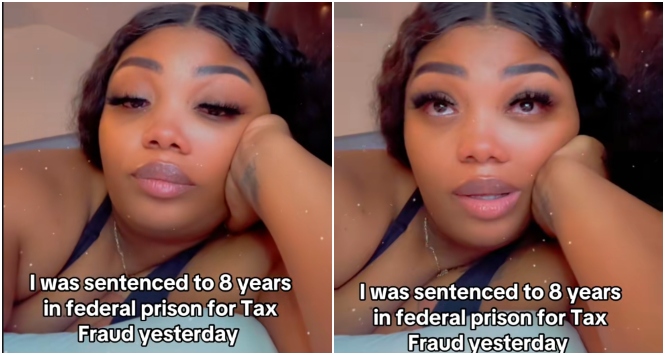
Jessica Crawford, the tax preparer at the center of a multimillion-dollar federal tax fraud investigation, took to TikTok last week to speak directly to her followers.
She shared her emotional state and frustrations just days after being publicly linked to an ongoing Internal Revenue Service-Criminal Investigations (IRS-CI) probe.
In a video posted to her TikTok account, Crawford addressed the public fallout and uncertainty surrounding her legal future after federal agents executed an undercover operation at her business in April 2022. The IRS-CI alleges that Crawford knowingly filed false tax returns on behalf of clients, including an undercover agent, and fabricated business losses to maximise refunds and credits.
“Y’all keep asking me how I feel,” Crawford began in her video, appearing visibly shaken. “I don’t know… I don’t have too many words.”According to the IRS-CI, during the undercover sting, Crawford created a fictitious landscaping business on the agent’s tax return based solely on a casual comment that he “mowed an aunt’s lawn sometimes.” Despite no documentation of income or expenses, Crawford filed a 1040 with a fabricated $19,373 Schedule C loss. That fraudulent deduction affected several credits and resulted in a federal tax refund of $12,359 — money the IRS says was never legitimately owed.
Crawford is accused of conducting a broader pattern of fraudulent behavior. A statistical review of 1,261 tax returns filed by Crawford for the 2020 and 2021 tax years showed allegedly fraudulent filings resulting in more than $3 million in improper refunds. The IRS says Crawford falsely claimed sick leave and family leave credits under Form 7202, in addition to dependent care and other tax credits.
In her TikTok post, Crawford admitted she has no clarity on what’s next.
“Where am I going? I don’t know that either. They’re gonna send me a letter in the mail,” she said.
She also voiced frustration about legal restrictions that she claims prevent her from speaking publicly in her defense.
“When I bonded out… they said I’m not allowed to talk about my case, period. And I think that’s kind of strange,” she said. “Y’all wouldn’t let me defend myself, because a lot of [it] was a bunch of lies.”
Though visibly emotional, Crawford said she had spoken to her children about the situation, calling the moment “bloat” — her apparent way of expressing how emotionally heavy and surreal the ordeal has been.
As of publication, no formal criminal charges have been publicly listed by the Department of Justice or the IRS, though the agency has confirmed its investigation is active.
Crawford’s case highlights a growing concern at the federal level around fraudulent tax filings and the exploitation of pandemic-related credits such as Form 7202.