The sudden media spotlight on White House Chief of Staff Susie Wiles has triggered a conspiracy about power, messaging, and intent inside President Donald Trump’s second administration, following controversial comments attributed to her in a recent Vanity Fair report.
Wiles, 68, the first woman to ever serve as White House chief of staff, was quoted in a two-part Vanity Fair article describing President Trump as having an “alcoholic’s personality,” billionaire Elon Musk as an “odd, odd duck,” and Vice President JD Vance as a “conspiracy theorist.”
The comments, reportedly drawn from a series of interviews conducted over the past year, triggered swift backlash and prompted questions about whether the remarks were intentional or taken out of context.
Wiles has dismissed the report as a “hit piece,” while the White House has publicly closed ranks around her. Trump, who has nicknamed her the “ice maiden,” reaffirmed his support, and Press Secretary Karoline Leavitt said the administration remains “fully united” behind the chief of staff.

But outside official channels, political observers are offering a different reading of the episode.
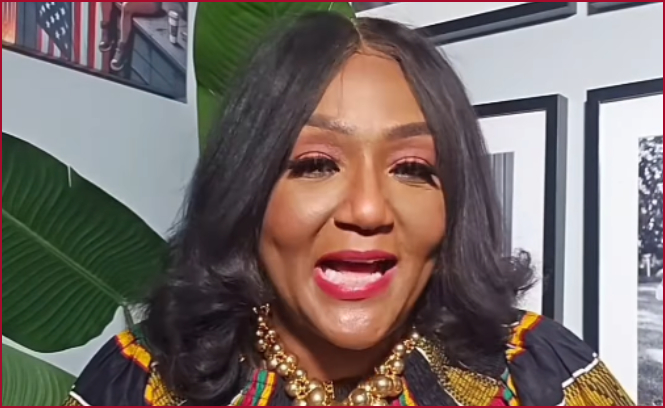
Political strategist and media commentator Nikki Free argued on Instagram that the controversy does not resemble an accidental misstep. In her view, Wiles is a seasoned political operative whose career spans from the Reagan era through recent Republican power centers in Florida, including work with Rick Scott and Ron DeSantis.
“People at her level don’t accidentally create situations like this,” Free said in a video accompanying her post. “When someone as experienced and calculated as Susie Wiles suddenly looks messy, the mess is usually the message.”
Free suggested the Vanity Fair episode may represent a form of deliberate signaling — a controlled leak wrapped in plausible deniability — rather than incompetence. According to this interpretation, such moments can function as quiet warnings or strategic cues aimed at insiders, investigators, or the media, without overt ownership.
Vanity Fair reported that its article was based on 11 on-the-record interviews conducted by journalist and documentary filmmaker Chris Whipple, beginning shortly before Trump’s inauguration in January.
Whipple described Wiles as chronicling the early months of Trump’s second term “amid each moment of crisis,” offering rare insight into an administration known for its secrecy and internal power struggles.
Whether the comments were strategic, misinterpreted, or selectively framed remains contested. However, the episode has reinforced Wiles’ reputation as one of the most influential — and enigmatic — figures in Washington, operating largely behind the scenes while shaping the direction of a deeply polarized presidency.
The unfolding debate offers a revealing look into how modern political power is exercised, how information is managed, and how silence, leaks, and ambiguity can sometimes speak louder than official statements.