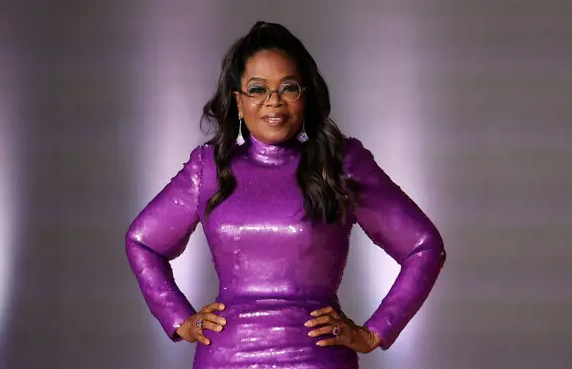
When asked whether it’s finally a joy to get dressed, Oprah Winfrey didn’t hesitate. Packing clothes that fit and feel good, she said, is a quiet luxury. “It is a joy to get dressed,” she laughed, calling the question “powerful.”
For decades, however, her relationship with her body was anything but joyful. At the height of her early fame—after “AM Chicago” began drawing national attention—she appeared on The Tonight Show with guest host Joan Rivers, who bluntly asked how she had gained weight. “I ate a lot,” Oprah replied at the time. Looking back, she recalls feeling humiliated—but not angry. “Because I thought, ‘She’s right.’”
Over 40 years, Oprah publicly gained and lost hundreds of pounds. In 1988, after a strict liquid diet, she famously rolled out a wagon carrying 67 pounds of animal fat to symbolize her weight loss. By the early 1990s, much of it had returned. Before one Daytime Emmy Awards ceremony, she prayed not to win, fearing the walk to the stage.
She trained relentlessly, even running a marathon in 1994. Yet her body seemed determined to return to what she now understands as a biologically influenced “set point”—around 211 pounds. That realization is central to “Enough,” a new book she co-wrote with Dr. Ania Jastreboff of the Yale School of Medicine. The premise: obesity is a chronic disease shaped by hormones and brain chemistry, not a simple failure of willpower.
The American Medical Association recognizes obesity as a treatable disease, a shift that reframed Oprah’s decades of self-blame. “It’s not my fault,” she said, admitting she could weep for the years spent believing otherwise.
Though initially resistant to weight-loss medications—fearing it would contradict her long-held message of discipline—Oprah began treatment two years ago. Combined with hiking and resistance training, she says she is now 155 pounds, feeling stronger at 71 than she did at 40.
From her childhood in Mississippi to her Montecito estate, Oprah still marvels at the journey. Quoting poet Countee Cullen, she says, “Yet do I marvel.” She wouldn’t change the struggle. It made her relatable. Now, she says, she feels something new: free.