Artificial intelligence can generate stunning digital art and lifelike portraits, but when it comes to accurately depicting Black women’s hairstyles, the technology still falls short.
That gap is now the focus of a growing research effort led by Blanca Burch, a Spelman College alumna and AI Innovation Scholar.
Burch is drawing attention to what she describes as a critical flaw in generative AI systems: their persistent inability to correctly identify and represent Black hair textures and styles. Through her study, “In the Context of Curls,” she analyzed more than 600 AI-generated images created across popular platforms including Midjourney and DALL-E.
Her findings were consistent. AI tools routinely confused distinct hairstyles, failing to differentiate between locs, twists, Fulani braids, cornrows, and other culturally specific styles. In some cases, the errors were almost surreal.
“When I typed in a Black woman with a pineapple hairstyle, the AI struggled,” Burch said. “It would either put an actual pineapple on my head or turn my hair green.”
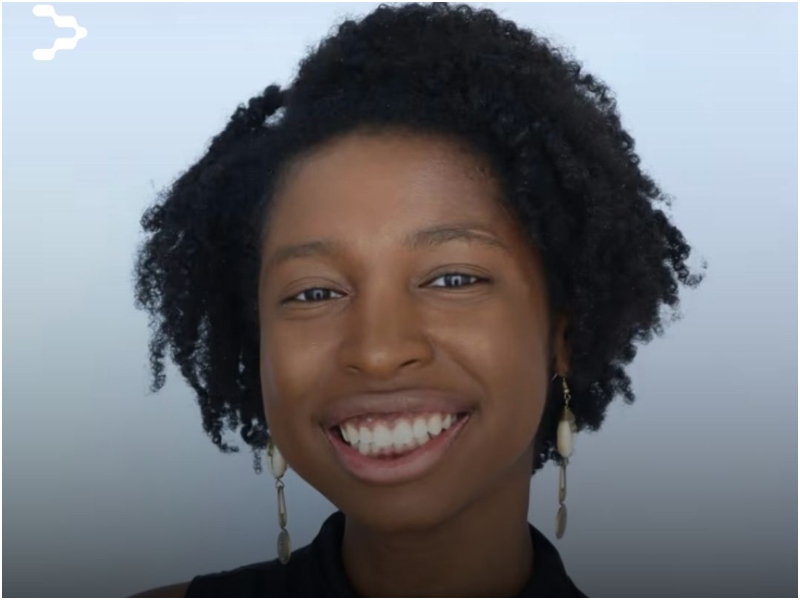
The pineapple — a high, protective hairstyle common among people with natural curls — is one of Burch’s signature looks. Its misrepresentation underscored a broader issue: a lack of sufficient and diverse training data that reflects the complexity of Black hair.
The study invites participants to review AI-generated images and identify whether the hairstyles shown are accurately labeled. Burch hopes to recruit at least 200 participants over the next year, using their feedback to build a clearer data-driven picture of where and how AI systems fall short.
Her work builds on long-standing conversations around representation. While the natural hair movement gained broader acceptance during the civil rights era and resurged in the 2000s through social media, emerging technologies have not kept pace.
Spelman College professor Jaycee Holmes, one of Burch’s mentors, said the issue mirrors earlier challenges in tech design. Holmes recalled working on a video background-blur feature that failed to properly detect her hair texture, making it impossible for the software to function as intended.
“That was a very obvious example of why technology has to work for everyone,” Holmes said.
Burch’s ultimate goal is not to criticize AI developers, but to collaborate with them. She hopes her research will encourage the creation of more inclusive datasets so Black women are not only consumers of AI technology, but are also accurately reflected within it.
“We’re at the start of a technological era,” Burch said. “The feedback being given now can make a really big difference.”
From afros and cornrows to twists and braids, Burch’s work highlights how cultural knowledge and technical design intersect — and why representation in artificial intelligence matters as these tools increasingly shape digital life.