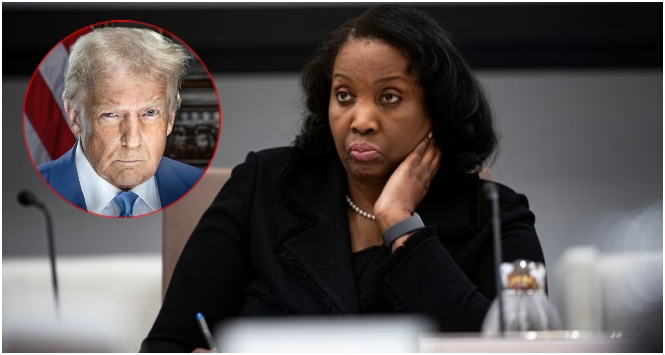
In what has been described as an escalation of tensions between the White House and the Federal Reserve, the U.S. Supreme Court on Wednesday, Oct. 1, 2025, denied President Donald Trump’s latest attempt to immediately oust Federal Reserve Governor Lisa Cook.
The Court has ruled Lisa Cook can remain in her post at least until oral arguments in January 2026.
The decision sets up what could become a landmark case on the limits of presidential power and the independence of the nation’s central bank.
Trump has been pressing for months to remove Cook from the Fed’s Board of Governors, citing unproven allegations of mortgage fraud — charges Cook flatly denies and for which she has not been criminally charged.

Critics say the allegations are little more than a pretext, noting Trump’s long history of pressuring Cook, Fed Chair Jerome Powell, and others to slash interest rates more aggressively to juice the economy.
The court’s terse order did not explain its reasoning, but its effect was clear: Cook will remain a voting member of the Federal Open Market Committee through the Fed’s crucial October and December policy meetings, despite Trump’s protests. That means Cook — who has advocated a cautious approach to cutting rates — will continue to shape the direction of U.S. monetary policy, even as Trump pushes for deeper reductions to borrowing costs.
“This case is about much more than one seat at the Fed,” said one constitutional law scholar. “It’s about whether the Federal Reserve can function as an independent institution, or whether presidents can bend monetary policy to their will by firing governors at will.”
The Department of Justice, representing Trump, has argued that blocking his removal power is “improper judicial interference with the President’s removal authority.” Cook’s attorneys, Abbe Lowell and Norm Eisen, counter that the law requires a clear legal “cause” for firing a Fed official — a standard Trump, they say, has not met.
The high court’s decision comes as the Fed itself faces mounting political pressure. At its September meeting, officials approved a quarter-point rate cut, with Cook supporting the move. Trump’s newly appointed Fed governor, Stephen Miran, dissented, demanding a half-point cut and signaling he wants much deeper reductions by the end of 2025.
For now, the Fed’s independence remains intact. But in January, when the Supreme Court hears oral arguments, the stakes will be nothing short of historic: whether the presidency can reshape the Federal Reserve in real time, or whether the guardrails of the Federal Reserve Act will hold.