In recent years, the world of skincare has taken a distinctly high-tech turn. Treatments once reserved for dermatology clinics, like laser facials, are now influencing the way everyday skincare products are formulated.
For the Black beauty community in particular, this shift is leading to a new generation of products designed to target concerns such as hyperpigmentation, uneven tone, and texture with greater precision.
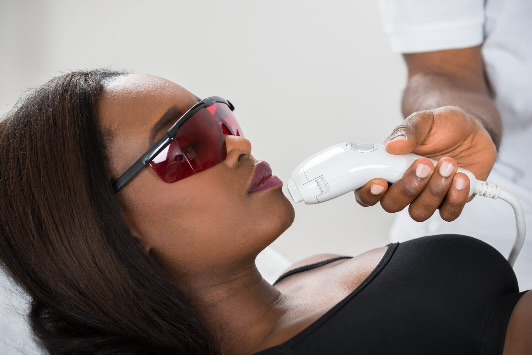
Laser facials have long been praised for their ability to resurface the skin, stimulate collagen production, and improve overall clarity. These treatments work by delivering controlled energy into the skin to encourage regeneration and repair. While professional lasers remain a clinical procedure, skincare brands are increasingly studying how those same skin-renewing principles can be translated into topical formulas.
The result is a wave of advanced skincare products that mimic the results of laser treatments, without the equipment. Many new formulas focus on ingredients that promote cell turnover and skin renewal, such as gentle exfoliating acids, peptides, and brightening agents that help improve tone and texture over time.
This development is particularly important in Black skincare. Melanin-rich skin can be more prone to hyperpigmentation, especially when irritation or inflammation occurs. Because of this, dermatologists often approach laser treatments for darker skin tones with extra care. In response, beauty brands are prioritizing formulas that deliver visible results while remaining gentle and supportive of the skin barrier.
One major trend inspired by laser treatments is targeted brightening. Modern serums and creams are being developed to address dark spots and uneven pigmentation gradually, helping skin appear smoother and more radiant without aggressive treatments. Ingredients like niacinamide, tranexamic acid, and stabilized vitamin C are becoming staples in these formulas.
Another influence is collagen-focused skincare. Since laser facials are known for stimulating collagen production, many beauty products now include peptides and other ingredients designed to support the skin’s natural structure. These formulas aim to improve firmness and elasticity while maintaining hydration.
Technology has also influenced how products are delivered. Encapsulation techniques and time-release ingredients allow active components to penetrate the skin more effectively while minimizing irritation, an important factor for sensitive or melanin-rich skin.
Ultimately, the intersection of technology and skincare is expanding the possibilities for beauty innovation. By taking inspiration from laser treatments and translating those concepts into thoughtful formulations, brands are creating products that offer powerful results while respecting the unique needs of Black skin.
The future of skincare may be high-tech, but it’s also becoming smarter, more inclusive, and more tailored than ever before.