More than a century ago, when most homes relied on fireplaces and coal stoves for warmth, a little-known Black inventor quietly laid the groundwork for how modern buildings are heated today.
Her name was Alice H. Parker—and in 1919, she patented a groundbreaking gas-powered heating system that would influence generations of technology to come.
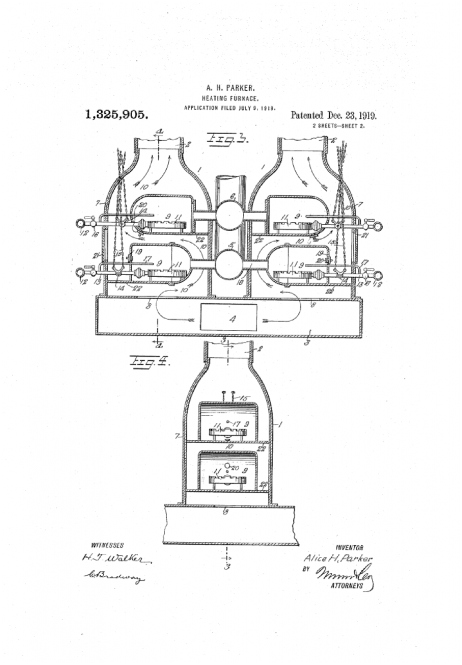
At a time when indoor heating was inefficient and often dangerous, Parker envisioned something radically different: a system that could safely distribute heat throughout an entire home using natural gas instead of wood or coal. Her design included air ducts and multiple burners, allowing heat to circulate more efficiently and even be controlled in different rooms.
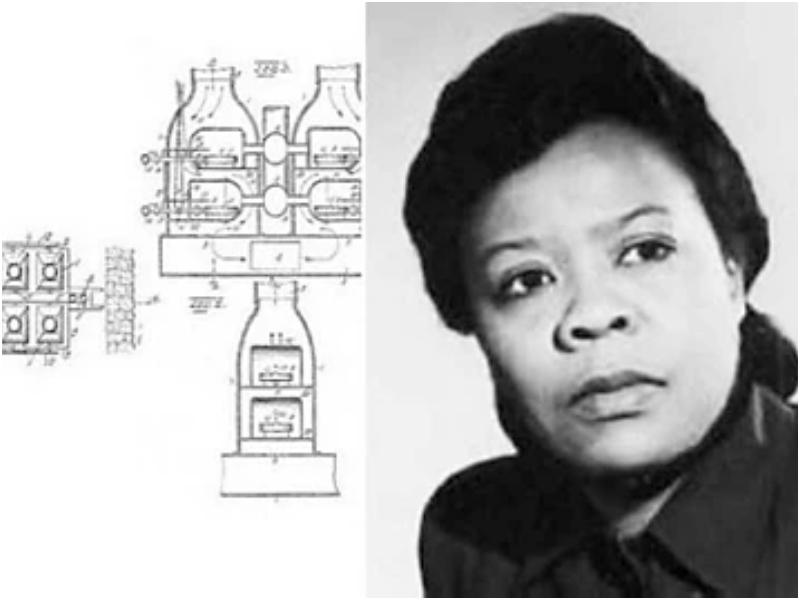
Experts say this concept—now known as “zone heating”—was far ahead of its time. While earlier systems relied on a single heat source, Parker’s design introduced the idea of regulating temperature across separate areas of a building, a feature now standard in modern central heating and HVAC systems.
“She imagined heating an entire home safely, with different rooms warmed individually,” historians note, describing a vision that predated widespread central heating adoption by decades.
Parker’s patent, granted on December 23, 1919, came during an era when Black women faced significant barriers in education, innovation, and recognition. Despite these challenges, she developed a system that replaced the need to constantly fuel fireplaces—reducing fire risks and improving efficiency.
Although her exact design was never fully commercialized—largely due to technological limitations at the time—its core principles became foundational. Modern heating systems, including forced-air furnaces and thermostatically controlled environments, reflect elements of Parker’s early concept.
Today, her contribution is increasingly recognized as part of a broader legacy of overlooked Black innovators whose work helped shape everyday life.
Little is known about Parker’s personal life, and even verified images of her are scarce. Yet her impact endures in nearly every heated home and office building around the world.
Her story, historians say, is a reminder that innovation often comes from unexpected places—and that many of the technologies people take for granted today are rooted in ideas once considered ahead of their time.