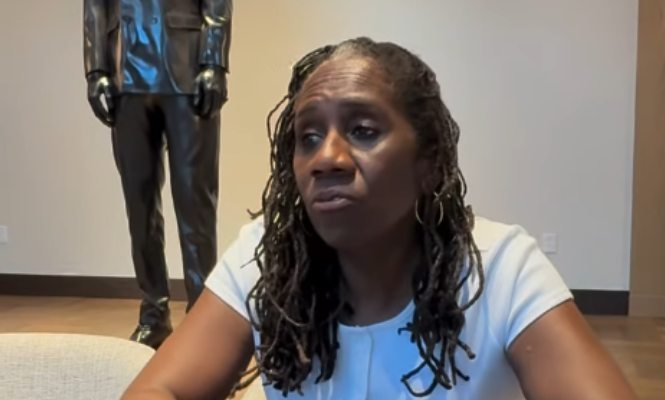
Civil rights attorney Sherrilyn Ifill is urging Black Americans to rethink the political map of the United States, arguing that Texas, not traditionally spotlighted Southern states like Mississippi or Georgia, holds the key to expanding Black political power nationwide.
In comments captured and shared on Instagram by Houston blogger Erika Harrison of “Black Girls Who Brunch,” Ifill said many people misunderstand where the largest Black population in America actually resides.
“What is the state that has the largest number of Black people?” Ifill asked. “People will say Mississippi, South Carolina, Georgia. And I’m always surprised that I have to explain to people; no, I didn’t say the largest percentage. The state that has the largest number of Black people in the state is Texas.”
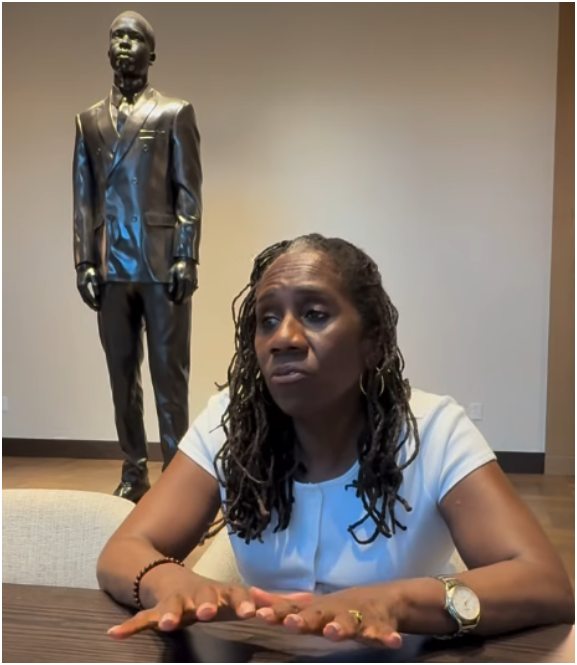
Calling Texas “the sleeping giant,” Ifill argued that Black political organizing efforts have not adequately matched the state’s demographic and electoral potential.
“It’s Texas,” she stressed. “If Texas is not organized, if we’re not organizing Texas as Black people and as Black voters, what are we doing?”
Ifill pointed to what she described as a major gap between Black voter strength and voter turnout in the state. According to her remarks, Black Texans make up roughly 20 percent of the state’s electorate, while Latino voters account for another 22 percent.
“The turnout numbers are — the math is not mapping,” she said. “So we are leaving power on the table.”
Her comments arrive as voting rights, redistricting battles, and voter mobilization efforts continue dominating national political conversations ahead of the midterm elections.
Texas has become a focal point in debates surrounding voter access, demographic shifts, and the growing influence of Black and Latino communities in statewide politics.
Ifill, the former president and director-counsel of the NAACP Legal Defense Fund, has long been one of the nation’s leading voices on civil rights litigation, voting rights protections, and racial justice advocacy. Her remarks resonated online because they reframed Texas not simply as a Republican stronghold, but as an under-organized center of potential coalition power.
“To the extent we’re not all eyes on Texas and the money is not coming to Texas, the resources to organize not only registration but turnout of the Black vote… we’re doing ourselves such a disservice,” Ifill said.
Rather than excluding organizing efforts in other states, Ifill stressed that Texas should become central to the long-term strategy for Black political influence in America.
“It has to be a critical part of the vision of Black political power in this country,” she concluded.
The remarks quickly circulated across social media, with many users agreeing that national political conversations often underestimate Texas’ Black electorate and overlook the organizing opportunities within the state’s rapidly diversifying population.