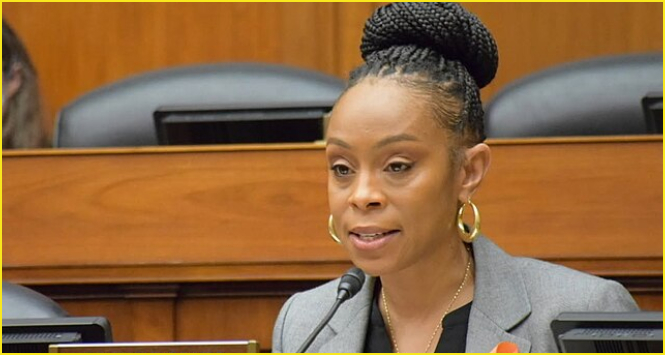
Shontel Brown is sounding the alarm over what she describes as a coordinated effort to redraw congressional maps across the South in ways that could dramatically weaken Black political representation.
Brown has accused Republican-led states of attempting to “engineer electorates” that favor former President Donald Trump and reduce the political influence of Black voters.
“Mississippi, Tennessee, Alabama, Louisiana, South Carolina, state after state after state,” Brown said in a sharply worded delivery on the house floor. “This is a coordinated effort to engineer electorates so that Trump has all the white majority districts he needs.”
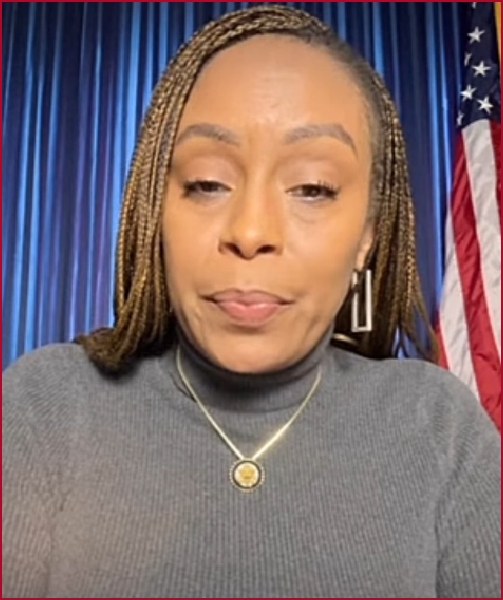
The congresswoman’s comments come amid intensifying legal and political battles over congressional redistricting following recent court decisions that critics say weakened protections once guaranteed under the Voting Rights Act.
Brown argued that the latest push to redraw district maps proves why the landmark civil rights law was necessary in the first place.
“The tragedy, the disgrace, is that this rush to redraw proves exactly why the Voting Rights Act was needed in the first place,” she said.
Her warning reflects growing concerns among civil rights advocates and Democratic lawmakers that Black voting power could be diluted in several Southern states with large African American populations.
Brown said the consequences could be historic if the efforts succeed.
“If they are successful, some of the states with the largest Black populations in the country will be represented by all white delegations in majority white districts,” she said.
The Voting Rights Act of 1965 was originally enacted to prohibit racial discrimination in voting, particularly in Southern states with long histories of suppressing Black voters through literacy tests, poll taxes, intimidation, and racially manipulated district maps.
However, portions of the law have been weakened over the years through Supreme Court rulings, including decisions that limited federal oversight of states with histories of voting discrimination.
Critics argue that those rulings opened the door for aggressive partisan redistricting battles now unfolding across several states ahead of upcoming elections.
Brown pledged that Democrats and voting rights advocates would continue challenging the maps politically and legally.
“We cannot and we will not take this sitting down,” she said. “We will fight this in Congress.”
Though acknowledging that supporters of voting rights protections currently lack the numbers needed in Congress, Brown expressed confidence that political momentum could eventually shift.
“We don’t have a voting rights majority in this body right now, but soon we will,” she said. “And we will restore the Voting Rights Act.”
Her comments quickly circulated online, where supporters praised her defense of Black political representation and voting rights protections, while critics accused Democrats of politicizing redistricting battles that both major parties have historically engaged in.
The debate arrives during a broader national fight over voting access, racial representation, and the future of electoral maps that could shape political power in Washington for years to come.