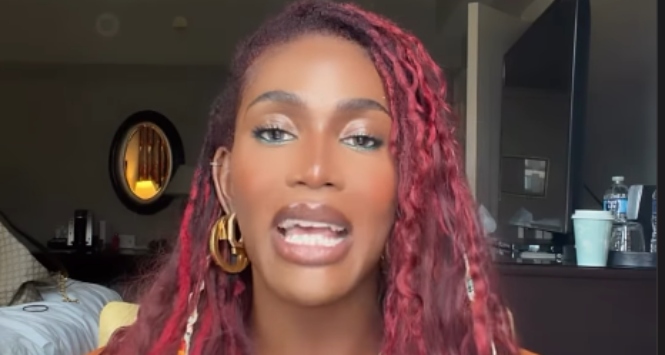
Activist and content creator Hope Giselle is adding her voice to growing criticism over recent voting rights and redistricting battles, warning that modern voter suppression no longer arrives in overtly racist packaging but through “clean language hiding ugly intentions.”
In a widely shared Instagram video, Giselle argued that new legal and political efforts to redraw electoral maps following recent Supreme Court decisions are threatening the political influence of Black and Latino communities under the guise of neutrality and administrative reform.
“What exactly are we calling democracy?” Giselle asked near the end of her commentary. “Because until y’all can have that conversation with the American people, I’ll wait.”
Her remarks come amid escalating national debate over the future of the Voting Rights Act and congressional redistricting in Southern states including Louisiana, Tennessee, Georgia, Alabama, Florida, and Texas. Critics argue that recent court rulings weakening protections under Section 2 of the Voting Rights Act are opening the door for Republican-led legislatures to redraw districts in ways that dilute minority voting strength.
Giselle framed the issue as part of a broader historical pattern in which Black political gains are met with institutional resistance.
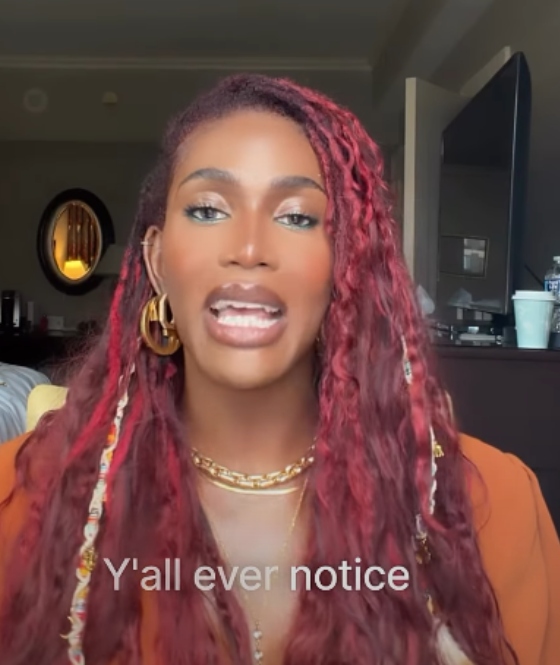
“Y’all ever notice how people only suddenly become colorblind when Black folks start gaining political power?” she said. “The second that Black and Latino voters organize enough to actually elect somebody, all of a sudden, race is inappropriate to consider.”
The influencer specifically pushed back against the idea that voter suppression must resemble the overt tactics associated with the Civil Rights era to remain dangerous.
“Sometimes voter suppression wears a suit,” she said. “It comes with legal language. It’s enough to make you miss the knife that they’re sliding in.”
Her comments echo concerns raised by voting rights advocates, civil rights attorneys, and Democratic lawmakers following court decisions that have reshaped how race can be considered in congressional mapmaking.
At the center of the debate are majority-Black voting districts, which were created in many states after decades of litigation and federal enforcement aimed at preventing minority communities from being fragmented across districts to weaken their electoral influence.
“For decades, the Voting Rights Act acknowledged something that this country kept trying to pretend wasn’t true,” Giselle said. “And that’s that racism affects political power.”
She argued that majority-Black districts were not designed as “special treatment,” but as legal remedies to combat intentional political dilution.
“If left to their own devices, they would carve up certain voters like Thanksgiving turkeys to weaken their influence,” she added.
Giselle also challenged narratives suggesting that communities upset over redistricting simply need to “vote harder,” arguing that the very success of Black voter mobilization is what is triggering efforts to redraw maps.
“The people are voting, and that’s the problem,” she said. “You don’t try this hard to suppress people who are politically irrelevant.”
The video arrives as public concern grows over the national implications of recent voting rights litigation. Advocacy groups warn that weakening federal protections could have consequences extending beyond race and partisan politics, affecting how representation, public resources, healthcare access, education funding, and criminal justice priorities are distributed.
“This isn’t just some boring legal story for political nerds,” Giselle said. “This is about whether marginalized communities get to meaningfully participate in shaping the country that we live in.”
Her commentary has become part of a broader wave of criticism from Black creators, legal analysts, and voting rights advocates who argue that the current redistricting fights represent a defining moment for American democracy ahead of the 2026 election cycle.