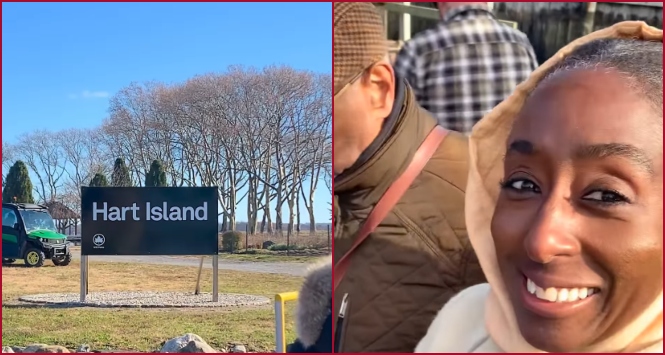
A casual trip to a little-known island in New York City has uncovered a remarkable—and largely forgotten—chapter of Black history.
When New Yorker Tiffany Martinbrough decided to take her retired father on an outing to Hart Island, she expected a simple day of sightseeing and history. Instead, the visit led her to the story of a Black entrepreneur whose ambitious dream of building an amusement park for Black New Yorkers was shut down before it could even open.
“A couple of months ago, I took my dad on a trip to Hart Island, which is off the coast of City Island in the Bronx,” Martinbrough explained in a social media video recounting the experience.
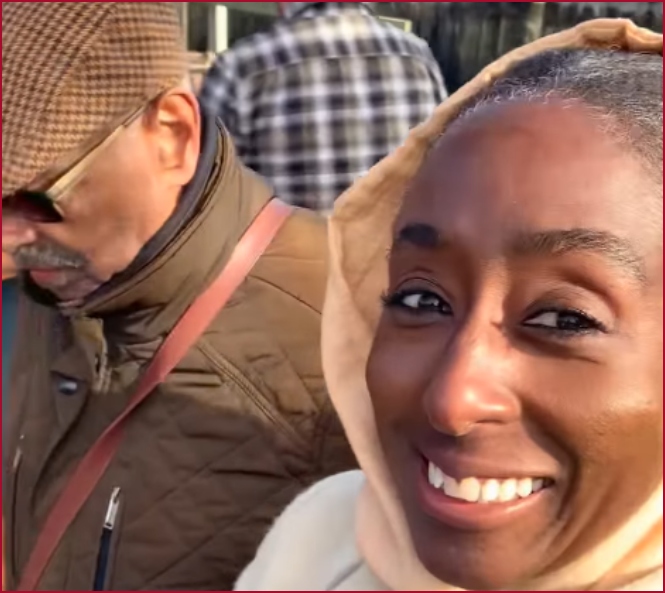
The pair reached the island by ferry across the Long Island Sound.
“To get there, we took a 10-minute ferry ride across the Long Island Sound,” she said, adding that the trip was meant to get her father—an avid viewer of history documentaries—out of the house.
“My initial goal was to get my retired dad off the couch to do something fun. He watches a ton of the History Channel, and one day he mentioned Hart Island.”
Martinbrough said she signed up for a guided tour hosted by the NYC Urban Park Rangers, expecting to learn about the island’s well-known past as a prison colony and burial site for unclaimed bodies.
“I didn’t know too much about Hart Island besides it being a former prison colony and unknown persons burial ground, so I thought we could both learn,” she said.
During the tour, Martinbrough discovered another historical role the island played:
“The tour was super informative, and I found out that among other functions, Hart Island was used as a training ground for the 31st Infantry, an all-Black regiment fighting the Confederacy during the Civil War.”
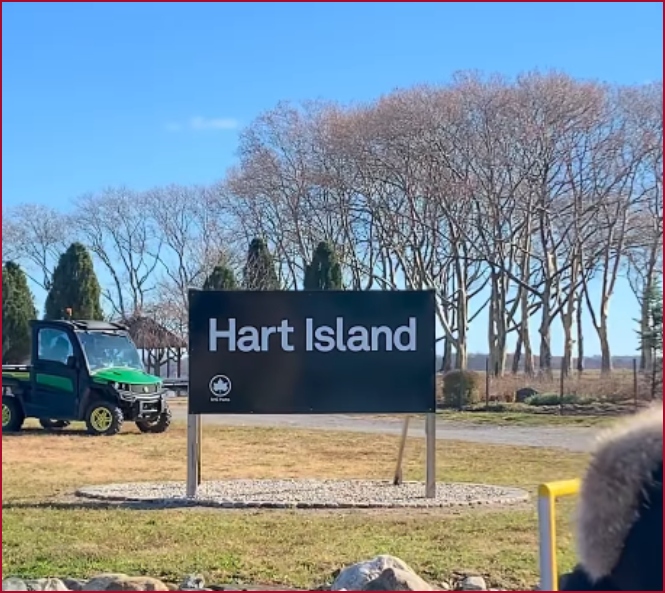
But the most surprising revelation came at the end of the visit.
“As we waited for the return ferry, a ranger pointed out that further down on the southern tip of the island, a Black millionaire named Solomon Riley built an amusement park for Black New Yorkers in the 1920s,” she said.
At the time, segregation severely limited where Black Americans could spend their leisure time.
“Black people faced segregation and had only limited access to whites-only parks like Rye Playland and Coney Island,” Martinbrough explained.
Learning about Riley’s effort stunned her.
“I was flabbergasted,” she said. “I’m aware there’s so much of our history that we don’t know, but as a native New Yorker, I had literally never heard of this man.”
Curious, Martinbrough began researching Riley’s life and vision.
“I found that Riley had actually built this resort on four acres on Hart Island,” she said.
The project was designed to serve as a recreational retreat for Black residents of New York City, who were often excluded from other entertainment venues due to segregation.
But Riley’s dream never became reality.
“Days before it was set to open, the city shut the whole thing down,” Martinbrough said. “They had an official list of reasons why, but I think we all know why it was never allowed to open.”
The discovery inspired Martinbrough to write about the forgotten entrepreneur and his unrealized project.
She later returned to Hart Island for a Black History Month tour to better imagine what Riley’s resort might have looked like.
“Even though I visited in the dead of winter, Hart Island is a wide-open expanse of land totally detached from the city,” she said.
“In the summer, cold breezes, scenic vistas, and proximity to relaxing water would have been an oasis for Black folks looking to escape their everyday situations.”
Riley’s vision was expansive.
“He had built a boardwalk, dance hall, bathing facilities, and boarding rooms,” Martinbrough explained.
Standing on the quiet island decades later, she reflected on what might have been.
“As I sat and let everything absorb, I realized that it would have been beautiful,” she said.
Today, the story of Solomon Riley serves as a reminder that many Black historical achievements—and lost opportunities—remain hidden in plain sight across American cities.