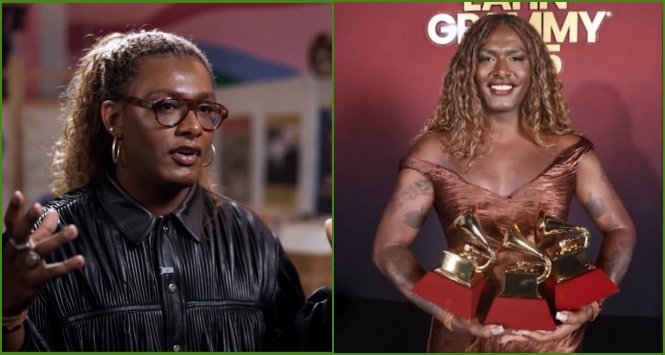
Brazilian singer-songwriter Liniker has shattered a major barrier in global music history, becoming the most-awarded trans woman in Grammys history after collecting three trophies at the 2025 Latin Grammys last week.
The milestone lands during Trans Visibility Week, giving the celebration an added emotional weight for fans across the U.S. and abroad.
Liniker—already a trailblazer as the first trans woman to win a Latin Grammy in 2022—walked into this year’s ceremony with six nominations across top categories, including Record of the Year, Album of the Year, and Song of the Year. She ultimately won three: Best Portuguese Language Song, Best Portuguese-Language Urban Performance, and Best Portuguese Language Contemporary Album for her critically acclaimed project Caju.
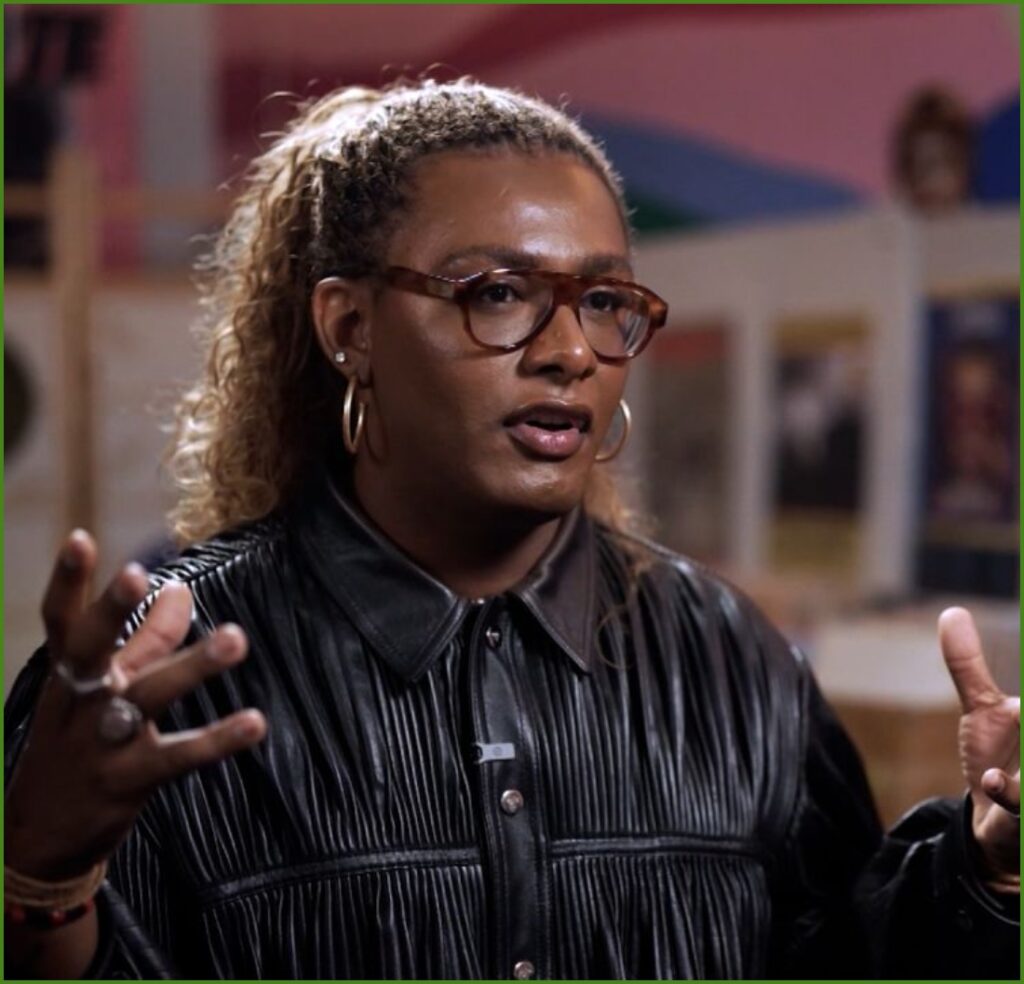
Her acceptance speeches were deeply personal, grounding her victories in the realities of living and creating music as a trans woman in Brazil, a country she described as one “that kills us.”
“Writing and poetry have been my great form of existence,” she said while accepting Best Portuguese Language Song. “Being a trans composer in Brazil… is extremely difficult.”
The audience—filled with Latin music heavyweights including Bad Bunny, Alejandro Sanz, Maluma, and Karol G—rose to applaud the moment.
In later remarks, Liniker thanked her team, honoring the people who supported her through a spiritual and artistic rebirth: “Thank you so much to all the people who continue to believe in the power of music, and in the power of Brazilian music.”
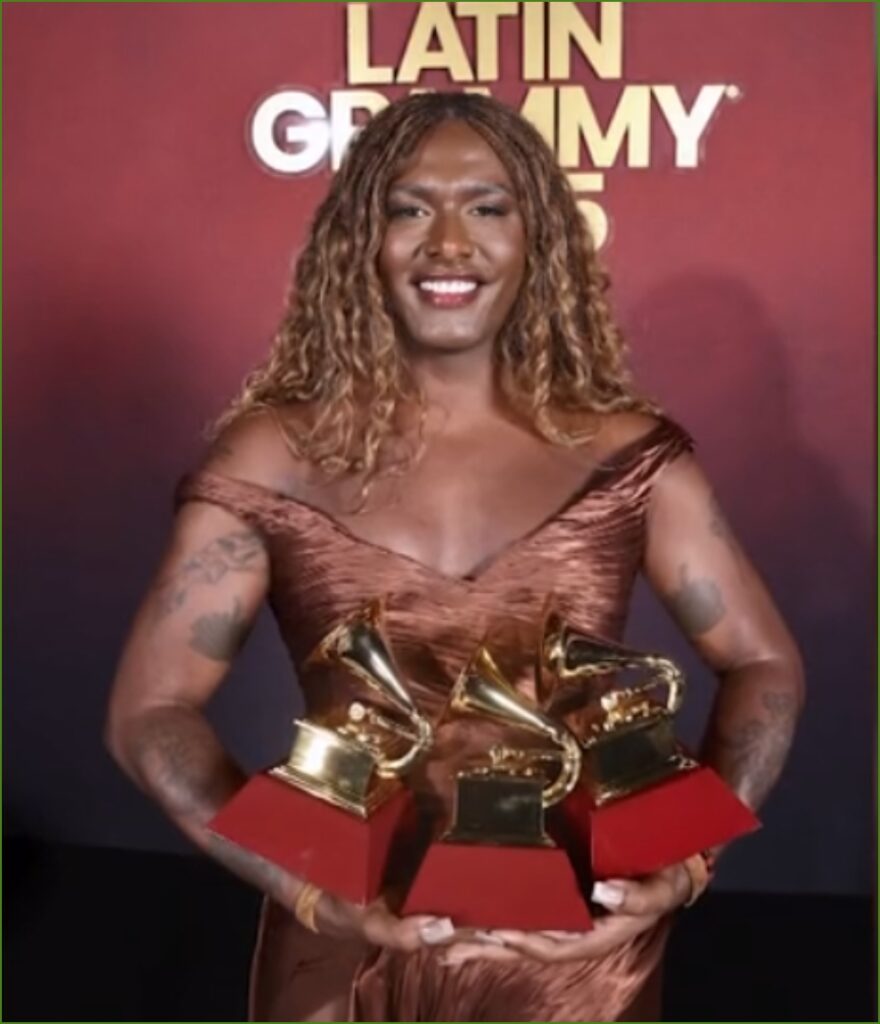
Her wins push her total to four Latin Grammys, surpassing trailblazers like electronic music pioneer Wendy Carlos and placing her just behind non-binary icon Sam Smith, who holds five Grammys.
Beyond her awards, Liniker delivered one of the ceremony’s standout performances with “Negona dos Olhos Terríveis.” It was a reminder of why Caju topped multiple “Best of 2024” lists, including Rolling Stone Brasil.
But the cultural weight behind her career is what resonates most. Liniker’s rise has long been intertwined with activism and representation. In a 2017 interview with NPR, she said simply existing as a Black trans woman is “political,” adding, “Society tries to invisibilize and delegitimize our existence.”
Her achievements now stand as a counterpoint to that erasure—proof that trans artists are helping shape the center of global culture, not the margins.
For American audiences watching Trans Visibility Week unfold amid ongoing legislative battles and heated national discourse, Liniker’s success lands as both inspiration and evidence: representation isn’t symbolic when it’s happening at the highest levels of the arts.