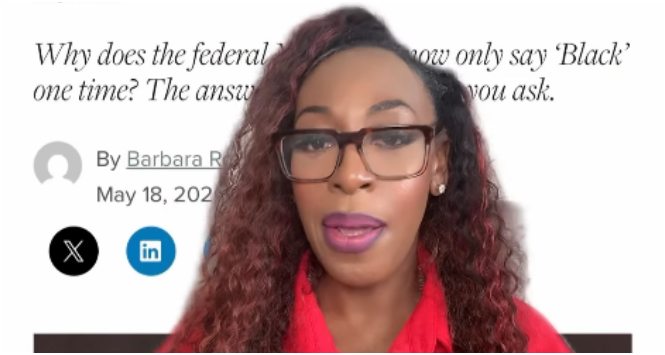
Attorney and legal commentator A.B. Burns-Tucker has raised concerns about efforts to remove the word “Black” from maternal health legislation aimed at addressing the disproportionately high death rates experienced by Black mothers in the United States.
In an Instagram video, Burns-Tucker questioned whether legislation can truly center Black maternal health if lawmakers avoid explicitly naming the community most affected by the crisis.
“This entire administration — if it’s a Black, it got to go,” Burns-Tucker said while discussing what some advocates describe as growing political pressure to strip race-specific language from public policy initiatives.
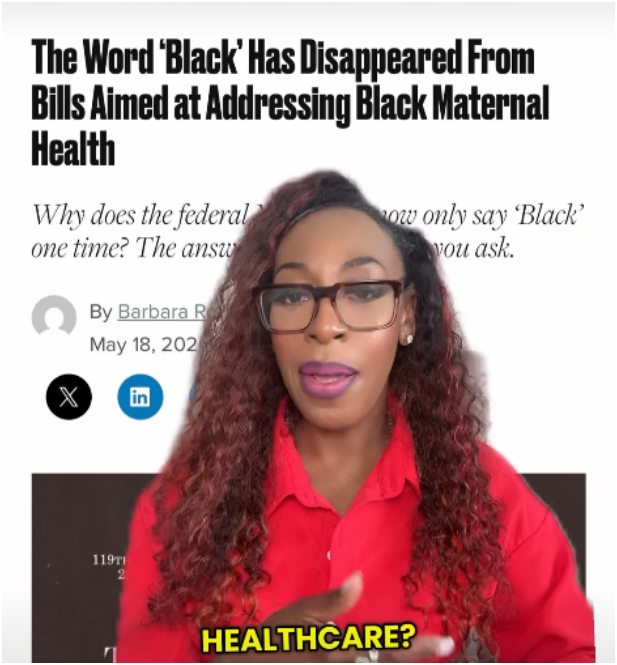
Her comments focused on ongoing discussions about the Black Maternal Health Momnibus Act, legislation championed by Lauren Underwood and other lawmakers aimed at combating racial disparities in maternal healthcare outcomes.
According to Burns-Tucker, some advocates believe that removing the word “Black” from the legislation weakens both the policy’s visibility and its intent.
“If we’re going to deal with Black maternal health care, and we’re going to focus on Black maternal health, then we need to specifically say Black. Period,” she said.
Others involved in the debate argue that political realities surrounding diversity, equity, and inclusion initiatives may require strategic compromises to keep portions of the legislation moving forward.
“Maybe the bill don’t say Black,” Burns-Tucker explained of the opposing viewpoint, “but at the end of the day, it’s still dealing with the issues at hand.”
The debate comes amid broader national disputes over DEI policies and the use of race-conscious language in government programs, healthcare initiatives, and education policy.
Burns-Tucker noted that Representative Underwood has spent years pushing for federal action on maternal health disparities, even as major portions of the broader legislation continue facing political resistance.
“There’s not enough Republican support,” Burns-Tucker said, while adding that Underwood has still managed to secure implementation of portions of the package designed to support maternal healthcare improvements.
The issue carries major public health implications. Black women in the United States have long faced disproportionately high rates of pregnancy-related complications and maternal mortality compared to white women, a disparity documented by numerous public health studies.
“America has the worst maternal health issues in the world,” Burns-Tucker said. “Then Black women specifically are getting hit 50 times worse.”
The online discussion reflects a growing divide among advocates over whether preserving race-specific terminology is essential to accountability and visibility, or whether practical policy outcomes should take precedence even if the language becomes more generalized.
For some supporters, removing the word “Black” risks diluting public understanding of who is most affected by the maternal health crisis. Others argue that securing healthcare resources and protections — even under revised language — remains the more urgent priority.
Burns-Tucker ultimately challenged viewers to consider whether lawmakers and advocates should continue compromising strategically or push harder to preserve explicit language centered on Black maternal health.