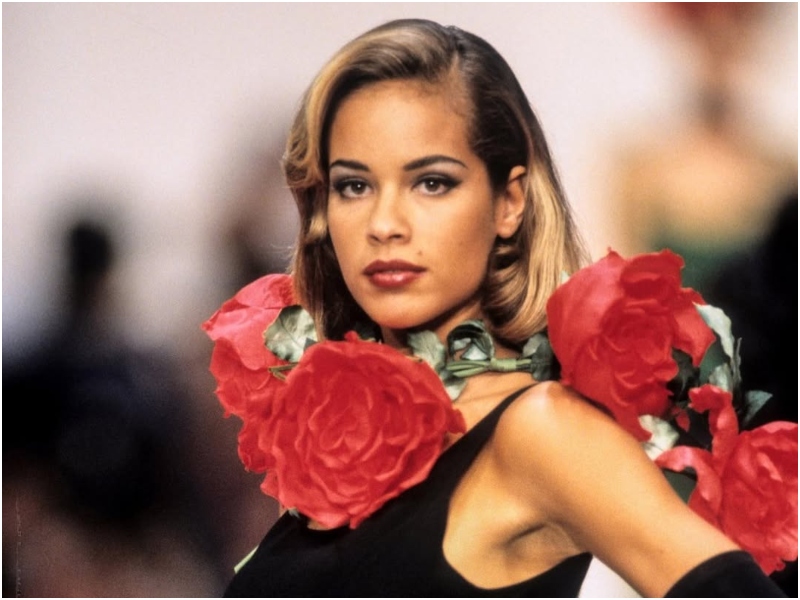
In the bustling streets of Amsterdam during the late 1980s, a chance encounter on a bicycle turned into the launchpad for one of fashion’s most resilient talents.
Ilonka Toppenberg, born in Aruba to a mixed heritage family, was pedaling through the city as a college student when a model scout spotted her from a taxi. Determined not to lose sight, the agent instructed the driver to follow her until they could approach.
“One day, I was riding my bike when a taxi followed me and stopped me on the street,” Toppenberg later recalled in interviews.
She agreed to meet, brought photos as requested, signed with an agency, and swiftly ascended into the elite circle of 1990s models.
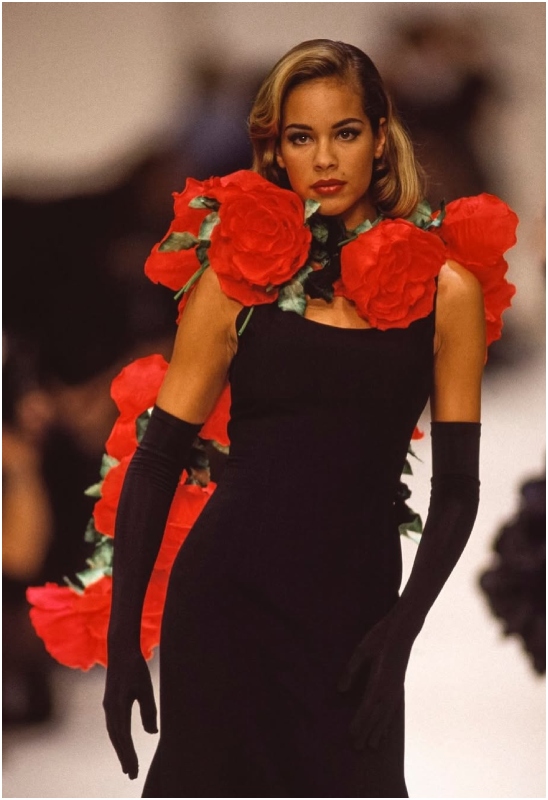
From 1987 to 1997, Toppenberg walked runways for powerhouses like Chanel, Chloé, Valentino, Yves Saint Laurent, Dior, and Karl Lagerfeld. She graced covers of Vogue, Elle (UK and France, where she was named one of their “Top 10 Models”), Harper’s Bazaar, and L’Officiel, photographed by legends such as Andrew Macpherson and Serge Barbeau.
Her work spanned high-fashion editorials and campaigns, embodying a striking blend of Caribbean warmth and European edge. Yet her path was marred by the industry’s deep-seated biases.
As a light-skinned woman of mixed Aruban descent with classic Black features, Toppenberg faced colorism head-on.
“Being a mixed model, I sometimes experienced that clients thought I was either too white or too black for a job,” she told author Marcellas Reynolds for his book Supreme Models: Iconic Black Women Who Revolutionized Fashion.
This “in-between” status often left her sidelined by designers adhering to rigid Eurocentric ideals or narrow definitions of Black beauty. Despite these rejections, she persevered, becoming a symbol of persistence in an era when Black models like Iman and Naomi Campbell were also battling exclusion.
Her story, resurfacing in recent discussions on racism in fashion amid movements like Black Lives Matter, highlights ongoing issues. Toppenberg has spoken of lifelong encounters with prejudice, urging younger generations to sustain momentum for inclusivity.
“I believe there is always hope,” she said in a 2020 PhotoBook Magazine feature. “For my whole life I have experienced and seen racism.”
Toppenberg’s legacy endures in archival footage and tributes, from YouTube compilations of her underrated runway walks to features in books celebrating Black models’ impact.
In a global industry still grappling with diversity—where colorism persists in casting and campaigns—her triumphs offer a reminder that talent often outshines barriers, though the fight for equitable representation continues.