A growing debate over the power of major technology companies has taken center stage after voting rights advocate and former Georgia gubernatorial candidate Stacey Abrams issued a sharp warning about what she describes as the rise of “economic overlords” in the tech sector.
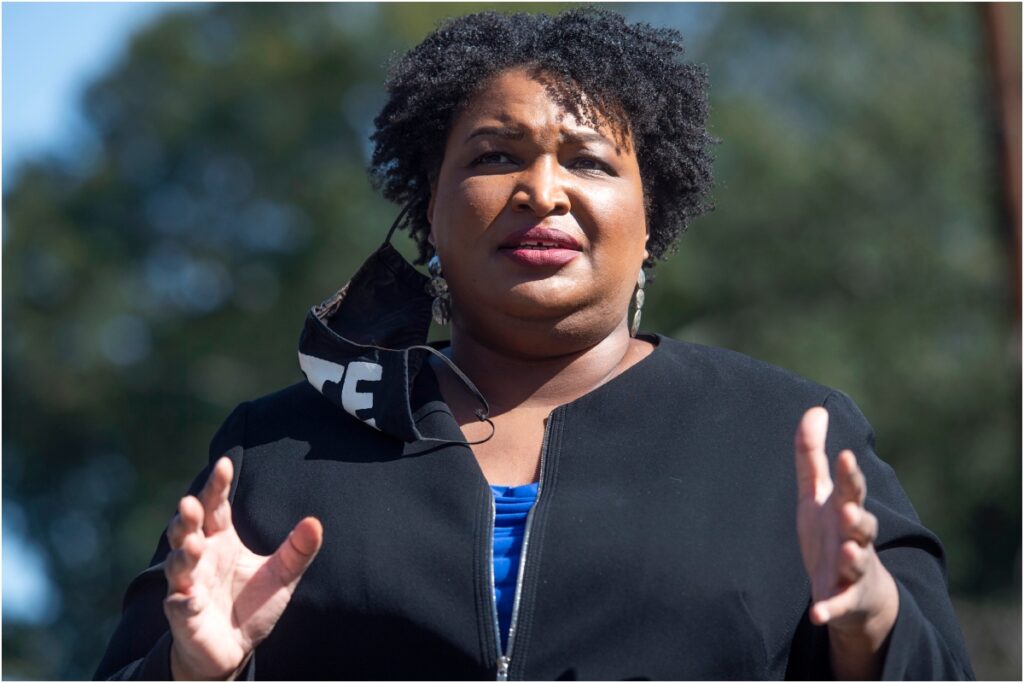
In a video shared by progressive media outlet Crooked Media, Abrams argued that rapid advances in artificial intelligence and digital platforms are reshaping society in ways that threaten democratic accountability, public oversight, and individual autonomy.
“Our newest frontier of artificial intelligence promises convenience and creativity,” Abrams said, “but it also threatens something more sinister.”
AI, Data, and the Shaping of Behavior
Abrams pointed to the expanding role of chatbots, prediction markets, and algorithm-driven platforms, warning that tools marketed as time-saving or innovative often double as mechanisms for mass data collection and behavioral influence.
According to Abrams, these technologies are not neutral. She argued they increasingly determine what people see, believe, and prioritize—making it harder to distinguish reliable information from manipulation.
“Dystopian movies no longer feel like fiction,” she said. “They’ve become business plans.”
Power Without Oversight
Central to Abrams’ critique is the concentration of power among a small group of technology executives and companies. She described a system in which dominant platforms no longer merely compete in markets but effectively are the market, shaping culture, commerce, and public discourse.
She cited a closed-door meeting in September between former President Donald Trump and leading technology executives—including figures from OpenAI, Meta, and Apple—as emblematic of the problem. Abrams noted that while the meeting was framed as a discussion on American innovation, it reportedly excluded conversations about regulation, guardrails, or the public interest.
“The same companies that once invested in social justice and claimed moral leadership are now aligning themselves with political forces that promise maximum freedom to operate with minimal accountability,” she said.
A Broader Democratic Question
Abrams framed the issue as extending beyond elections or partisan politics. She argued that safeguarding democracy in the digital age requires public scrutiny over who controls data, platforms, and the infrastructure shaping daily life.
“Fighting for democracy must go beyond the vote for who holds office,” Abrams said. “It must include a vote on who gets our data and our loyalty.”
As governments around the world struggle to regulate fast-moving technologies, Abrams’ remarks add to mounting calls for stronger oversight of artificial intelligence, platform governance, and corporate power.
Whether policymakers respond with meaningful regulation may determine, as she warned, whether technology serves the public—or quietly rules it.