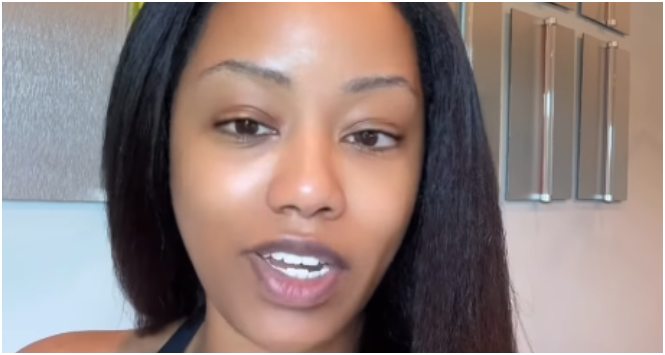
Digital creator La Reine has defended the NAACP’s push for elite Black athletes to reconsider attending universities in states accused of suppressing Black voting power.
In the Instagram video that is fast gaining traction, La Reine argued that many critics misunderstand the enormous influence Black athletes hold over major college sports programs, particularly in the South.
“The athletes make the school elite,” she said. “It’s not the schools that make the athletes elite.”
Her comments come amid growing national conversations about the relationship between college athletics, racial politics, and economic power.
The NAACP recently launched campaigns encouraging Black athletes and families to examine whether they should financially and culturally support institutions located in states facing accusations of racial gerrymandering or voting restrictions.
La Reine expressed surprise at backlash toward the organization’s position.
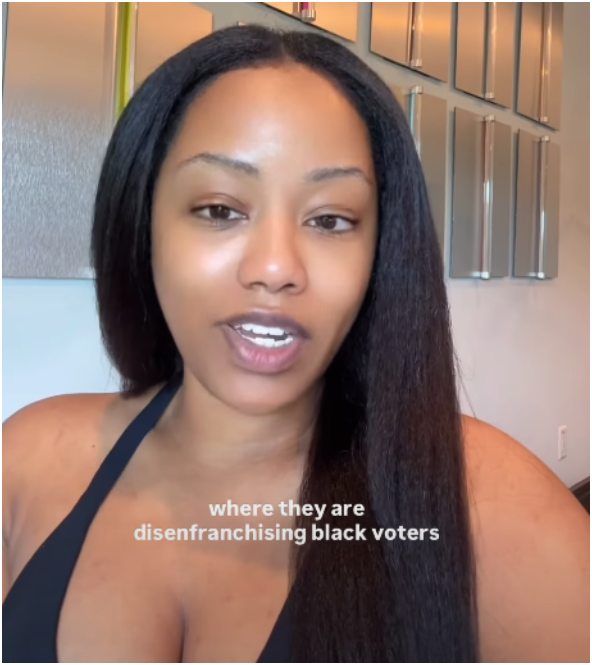
“I’m actually stunned that people are upset with the NAACP for telling elite Black athletes not to attend these southern schools in states where they are disenfranchising Black voters,” she said.
The creator framed the issue not simply as sports activism, but as a broader lesson about collective economic leverage and institutional dependence on Black talent.
“One thing the NAACP understands that a lot of other people don’t is that the power is with the people, not with institutions, not with corporations,” she said.
Her remarks echo longstanding discussions about the outsized role Black athletes play in generating revenue for major collegiate athletic conferences, especially in football and basketball. According to NCAA demographic data, Black athletes make up a significant share of athletes in revenue-producing sports at many powerhouse universities across the Southeastern United States.
Critics of voting restrictions and racial gerrymandering have increasingly pointed to what they see as a contradiction between schools profiting heavily from Black athletic talent while operating in states accused of weakening Black political representation.
La Reine suggested that if elite Black athletes collectively chose different schools, the balance of power in college sports could shift dramatically.
“Imagine if all elite Black athletes left these southern schools,” she said. “They would literally not matter.”
The debate also intersects with the modern era of college athletics, where athletes now possess greater economic influence through Name, Image and Likeness (NIL) deals, transfer portal flexibility, and expanding public platforms on social media.
Supporters of athlete activism argue that college players increasingly recognize their cultural and economic value beyond sports performance alone. Others argue that student-athletes should avoid becoming entangled in partisan political battles and focus primarily on education and athletics.
Still, the conversation reflects a growing movement that views sports as deeply connected to broader struggles over civil rights, representation, and economic justice.
For La Reine, the issue ultimately comes down to understanding where institutional power truly originates.
“What the NAACP is asking Black elite athletes to do is exercise their power,” she said, “because the power is still with the people.”