
Ana Maria Gonçalves, one of Brazil’s most celebrated contemporary authors, has shattered a 128-year barrier by becoming the first Black woman elected to the Brazilian Academy of Letters (Academia Brasileira de Letras).
Her election to the storied institution, founded in 1897 and modeled after France’s Académie Française, marks a historic milestone for Black Brazilians and women in literature.
Gonçalves, 54, is best known for her critically acclaimed 2006 novel Um defeito de cor (A Colour Defect), a sweeping 950-page epic that narrates Brazilian history through the lens of a Black woman. The novel, which has sold more than 180,000 copies, was recently hailed by Folha de S. Paulo as the greatest Brazilian literary work of the 21st century so far.
“I’m the first Black woman, but I can’t be the only one,” Gonçalves said after the vote, expressing her hope to open doors for others long excluded from Brazil’s literary elite.
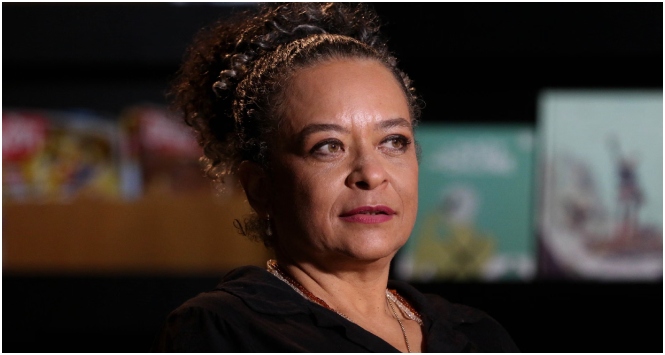
Out of 31 members who voted, 30 cast their ballots for Gonçalves. The remaining vote went to Eliane Potiguara, a 74-year-old Indigenous writer. The competitive field included 13 candidates.
While the Academy has long celebrated its founding president, Joaquim Maria Machado de Assis — a Black man considered Brazil’s greatest writer, its membership has since remained overwhelmingly white and male. Currently, Gonçalves becomes just the sixth woman, and joins a small number of Black men and one Indigenous writer among the 40 members, known as “immortals.”
President Luiz Inácio Lula da Silva praised her election, revealing that Um defeito de cor was his “companion” during his 580 days in prison. “I always make a point of recommending it to everyone,” Lula said.
Poet and translator Stephanie Borges hailed the decision as a transformative moment. “When it’s us telling our own stories, we invite those who look like us to come closer to literature,” she said. Meanwhile, author Cidinha da Silva affirmed, “She was not elected because she is Black, but because she is one of the greatest living writers in Brazil.”
Though Gonçalves ran a modest campaign, sending her book and personal letters to Academy members, and calling some to discuss her work, she stressed that she never directly solicited votes.
In 2018, renowned Black author Conceição Evaristo stood for election but received only one vote, a reflection of how much progress still needs to be made.
“The Academy does need more women, more Black people, Indigenous people, and people from other parts of Brazil,” Gonçalves noted. “And I hope that now, from the inside, I can help make that happen.”
As Brazil continues to reckon with its colonial past and systemic racism — in a country where more than half the population is of African descent — Gonçalves’s election is more than symbolic.
It is a meaningful step toward a more inclusive literary and cultural future.


