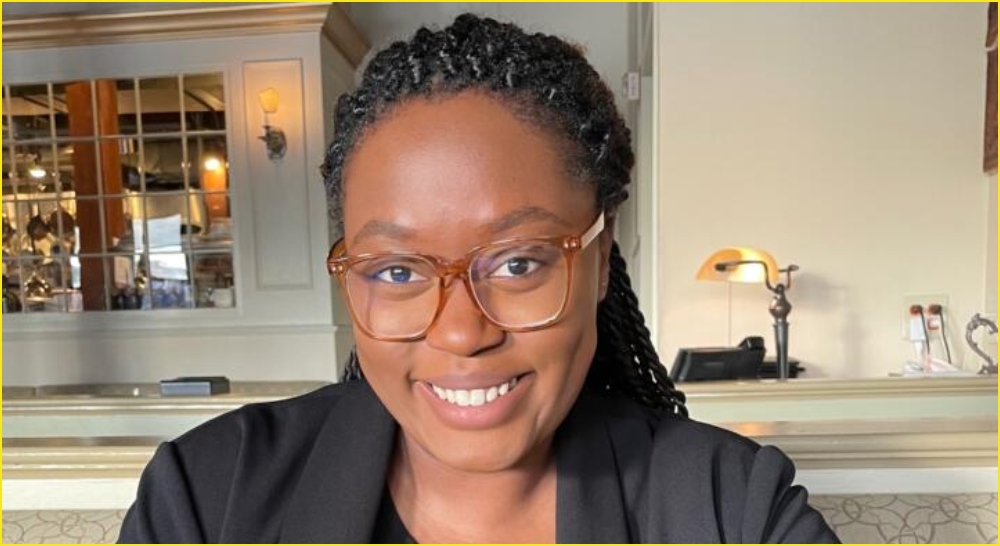
Harvard PhD candidate and rising digital creator Shae O. Omonijo believes the ground beneath higher education and the broader economy is shifting.
She says the next wave of power players won’t come from Silicon Valley boardrooms or elite academic departments, but from the creators’ corner of the internet.
In a video posted to her Instagram account, @iamshaeo, Omonijo laid out a clear prediction: as the creator economy booms and the traditional university model strains under the weight of unsustainable student debt, “academic creators” will emerge as a new class of public intellectuals—and potentially the new face of education itself.
“All the smart people to the front,” she begins, before outlining what she calls a major economic inflection point. “The creator economy is exploding and is only projected to keep growing in the next couple of years. At the same time, higher education is at a large impasse. Students are being saddled with literally hundreds of thousands of dollars… it’s just an unsustainable system.”

Omonijo, who also runs a free YouTube series called Critical Thinking in the Age of AI, says the crisis is creating a pathway for experts, researchers, and PhDs to bypass institutional constraints and take their knowledge directly to audiences hungry for substance.
“In the age of anti-intellectualism, people are really hungry for knowledge and expertise and wisdom,” she says. “And I believe academic creators and expert creators are poised to capture the market moving forward.”
Her own meteoric rise reinforces the point. She says she jumped from 700 followers to over 100,000 in about four to five months, simply by “yapping on here”—a self-effacing way of describing the short-form educational content she posts on social media. Her other platforms, she adds, are growing just as quickly.
A Changing Economy Meets a Crumbling System
Omonijo’s comments come at a moment when the contradictions of higher education are becoming impossible to ignore. Universities continue to raise costs even as wages stagnate, tenure-track jobs dwindle, and adjuncts—often PhD holders—teach for poverty-level pay.
“Being an academic is not easy these days. You’re overworked and underpaid,” she notes, echoing the frustrations of academics nationwide who are navigating shrinking job prospects and the pressure to publish while taking on heavier teaching loads.
Against this backdrop, the creator economy offers something academia increasingly cannot: autonomy, visibility, financial upside, and a direct relationship with learners.
For many scholars, the shift isn’t about chasing virality—it’s about survival.
Will Academic Creators Become the New Educators?
The rise of experts on TikTok, Instagram, YouTube, and Patreon suggests that audiences are not only open to being educated through social media—they’re actively seeking it out. From medical doctors debunking misinformation to economists breaking down fiscal policy in 60 seconds, “microlearning” is fast becoming a staple of modern digital life.
Omonijo argues that this trend doesn’t cheapen education—it democratizes it.
“There are so many PhD candidates and PhDs like myself who are turning to social media as a distribution channel for education and spreading amazing ideas,” she says.
Her prediction is bold but not far-fetched: if higher education continues on its current trajectory, academic creators may form a new parallel system—one that is cheaper, more accessible, and more responsive than traditional universities.
“Academic creators… are going to redefine higher education as well as the creator economy,” she concludes. “Just watch.”
Whether academia sees this shift as a threat or an opportunity may determine the future of learning itself.