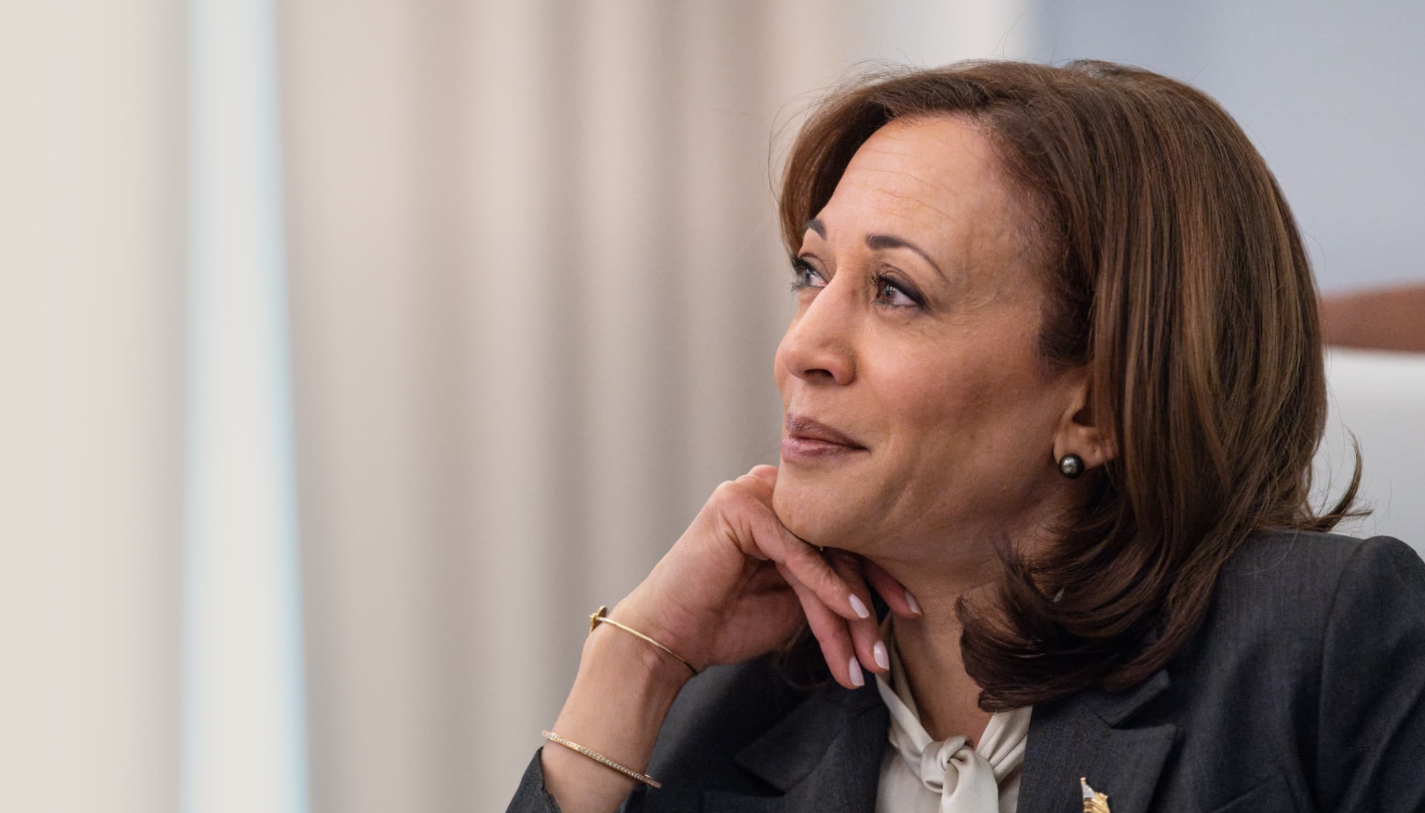
Former Vice President Kamala Harris is drawing renewed attention as a potential contender in the 2028 presidential race, as new polling and analysis suggest Democratic voters may be more receptive to a pragmatic, center-leaning candidate than the party’s public image sometimes suggests.
A recent survey analysis published by the Manhattan Institute found that the Democratic coalition is more ideologically diverse and moderate than commonly portrayed. According to the analysis, the party’s largest bloc of voters prefers a “normal,” middle-of-the-road governing approach rather than strongly ideological positions.
The same analysis highlighted early primary polling in which Harris leads potential Democratic contenders. In one survey of Democratic primary voters, Harris received 23 percent support, narrowly ahead of Gavin Newsom, the governor of California, who received 20 percent. The results suggest that Harris remains a prominent figure within the party despite her defeat to President Donald Trump in the 2024 election.
On policy questions ranging from immigration and crime to education and social policy, respondents frequently favored incremental or centrist positions rather than sweeping ideological changes. Analysts behind the survey concluded that the party’s median voter sits closer to the political center than many activists or commentators assume. That dynamic could benefit a candidate like Harris, whose national profile and governing experience appeal to a wide range of Democratic voters.
Speculation about Harris’s political future has intensified as she continues to appear in early polling of potential 2028 contenders. Since leaving office, she has maintained a visible public presence through the release of a memoir, a nationwide book tour, and regular appearances at events with Democratic supporters.
Harris has not formally announced whether she plans to run again. However, she has also stopped short of ruling it out. During a February 2026 live video conversation, Harris acknowledged the possibility directly, saying she had not yet made a decision but adding, “I might,” when asked whether she would consider another campaign.
In earlier interviews reported by The Hill, Harris emphasized that she is “not done” with public service, though she has avoided outlining a timeline for any future political plans.
Political analysts say Harris’s cautious approach reflects broader uncertainty within the Democratic Party following the 2024 election. With some voters expressing fatigue over ideological divisions, the survey suggests that candidates seen as steady, familiar, and broadly acceptable may have an advantage heading into the next presidential cycle.
Whether Harris ultimately launches another campaign remains unclear. For now, favorable early polling, sustained visibility, and signs that Democratic voters may welcome a centrist recalibration have kept her firmly in the conversation about the party’s future leadership.