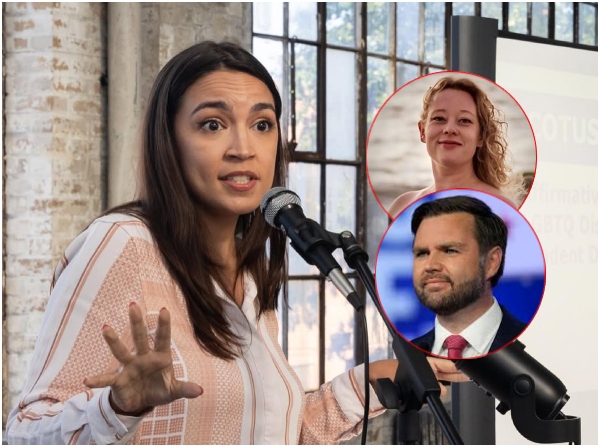
Alexandria Ocasio-Cortez’s recent on-camera response to Vice President J.D. Vance following the controversial killing of Renee Good is winning praise online.
Even people who claim not to typically align with her politics have applauded the fierce congresswoman as clips of her remarks spread widely across social media.
The New York congresswoman, frequently known by her initials AOC, was speaking to reporters outside Capitol Hill on Jan. 9, 2026, when she sharply contrasted her own view of America with what she described as the vice president’s stance.
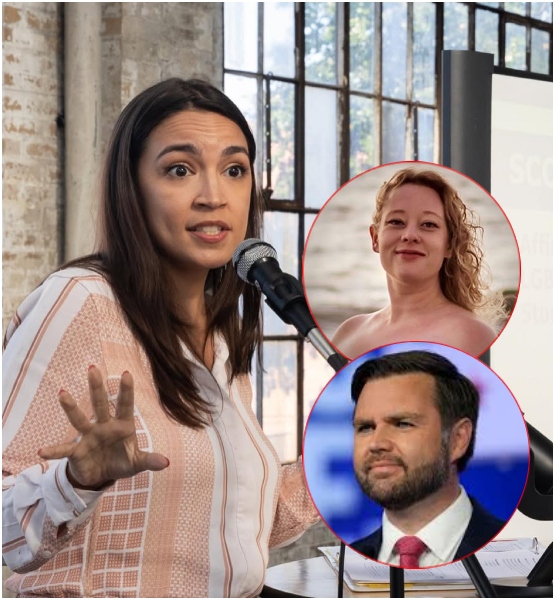
The discussion followed the fatal shooting of Good, a young mother of three, by an ICE agent — a case that has stirred intense national debate over immigration enforcement and use of force.
AOC said the tragic inicident borers on accountability and public safety, declaring:
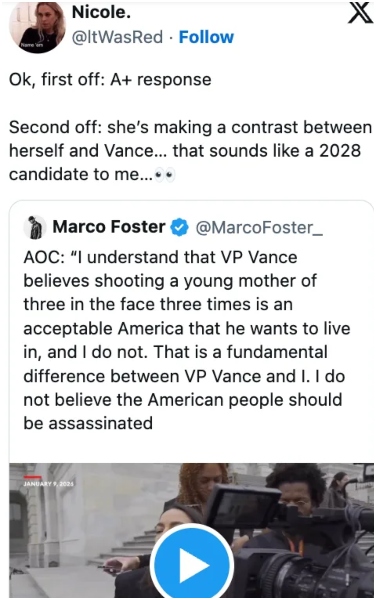
“I understand that Vice President Vance believes that shooting a young mother of three in the face three times is an acceptable America that he wants to live in, and I do not.”
She added forcefully, “I do not believe the American people should be assassinated in the street,” positioning her stance in stark opposition to Vance’s comments defending the federal agent’s actions.
Social Media Reaction Goes Beyond the Usual Lines
What made the exchange stand out was not just the content of AOC’s remarks but the response they generated online. Users from across the political spectrum praised her clarity and forceful language. On platforms like X (formerly Twitter), many echoed her critique:
- “Exactly,” one user wrote in support of her phrasing.
- Another commented, “AOC is the leader we deserve in this moment,” reflecting the admiration from some quarters for her leadership tone.
Some commentators even suggested the response was strategic and forward-looking, with one viewer saying, “…that sounds like a 2028 candidate to me…” — highlighting speculation about AOC’s future political aspirations.
Context: A Nation Divided on Use of Force and Political Rhetoric
AOC’s remarks didn’t occur in a vacuum. They came after Vice President Vance defended the ICE agent’s actions, describing him as protected by “absolute immunity” and justified in his use of force.
Many observers saw AOC’s firm rebuttal as more than a political sound bite — but part of a broader debate over how public officials talk about violence, accountability, and the value of civilian life in the United States.
While AOC and Vance represent sharply different perspectives on law enforcement and executive authority, the viral nature of her response illustrates how political rhetoric now resonates well beyond traditional partisan audiences.